

Hamilton, Virginia, combines small-town charm with convenient access to the rest of Loudoun County. Its housing includes historic properties, traditional residences, updated farmhouses, and newer homes designed for modern family life. Although these homes differ in age and architecture, many owners want window treatments that feel substantial, operate reliably, and remain attractive as interior styles evolve.
Plantation shutter installation in Hamilton offers that combination of lasting style and everyday function. Custom interior shutters become an architectural feature of the window rather than a temporary layer placed over it. Their adjustable louvers let homeowners manage daylight, privacy, and outward views, while their fitted frames give each opening a crisp, finished appearance.
The quality of the final result depends on more than selecting an appealing sample. Accurate measurements, the correct frame, suitable panel configuration, thoughtful louver sizing, and professional installation all matter. The Blind, Shade & Shutter Co. helps homeowners make these choices based on their specific windows, rooms, and priorities. Service is available in Hamilton and throughout Loudoun County, as well as Fairfax County, northern Fauquier County, Prince William County, and Clarke County.
Why Interior Shutters Remain a Popular Choice
Interior shutters have a presence that few other window treatments can duplicate. Because they are built for the individual opening, they appear integrated with the window and surrounding trim. Their clean lines can complement traditional architecture, but the right configuration can look equally appropriate in transitional, farmhouse-inspired, or contemporary spaces.
Homeowners often choose plantation shutter installation in Hamilton because shutters can satisfy several needs with one treatment. Tilting the louvers adjusts light and privacy without requiring the panels to be opened. Swinging the panels away provides a clear window when desired. The rigid construction creates a tailored look, and the absence of loose fabric makes routine care relatively straightforward.
Shutters also work well in rooms that need visual consistency. A series of front-facing windows can receive coordinated frames and louvers, creating a unified appearance from both inside and outside the house. Rather than following a short-lived trend, custom shutters can serve as a stable foundation while wall colors, furniture, and accessories change around them.
Understanding the Parts of a Plantation Shutter
A plantation shutter system includes more than the visible louvers. Panels sit within or against a frame that is designed for the window opening. Stiles form the vertical sides of each panel, while rails provide horizontal structure. The louvers rotate together through an operating mechanism, and hinges allow the panels to open when access to the glass is needed.
A successful plantation shutter installation in Hamilton begins with choosing components that work together. Louver size affects the view, the amount of light entering the room, and the overall scale of the treatment. Frame style determines how the shutter meets existing trim and how installation tolerances are handled. The number and placement of panels influence appearance, weight, and access to the window.
Homeowners can also choose between visible tilt rods and more discreet operating systems, depending on the selected shutter line. A traditional center tilt rod adds a familiar detail, while an offset or hidden mechanism creates a less interrupted view through the louvers. These differences may seem subtle when viewed individually, but together they shape the character of the finished shutter.
Custom Measurement Is Essential
Windows that appear identical are not always the same size. Openings can be slightly out of square, trim depths can vary, and locks or handles may project into the space needed for the shutter. Older homes can have especially distinctive dimensions, while newer construction may include groups of windows that require careful alignment.
Before plantation shutter installation in Hamilton, a professional measures the opening and evaluates the surrounding conditions. Measurements may be taken at multiple points rather than relying on a single width and height. The consultant also checks mounting depth, sill shape, trim, obstructions, window operation, and the space required for panels to swing.
This information guides both ordering and installation. A fraction of an inch can affect whether a frame fits properly, whether adjacent panels align, or whether the louvers clear a window handle. Professional measuring reduces the risk of gaps, rubbing, uneven reveals, and other issues that can undermine an otherwise high-quality product. It also allows unusual conditions to be addressed during planning instead of becoming surprises on installation day.
Inside Mount Versus Outside Mount
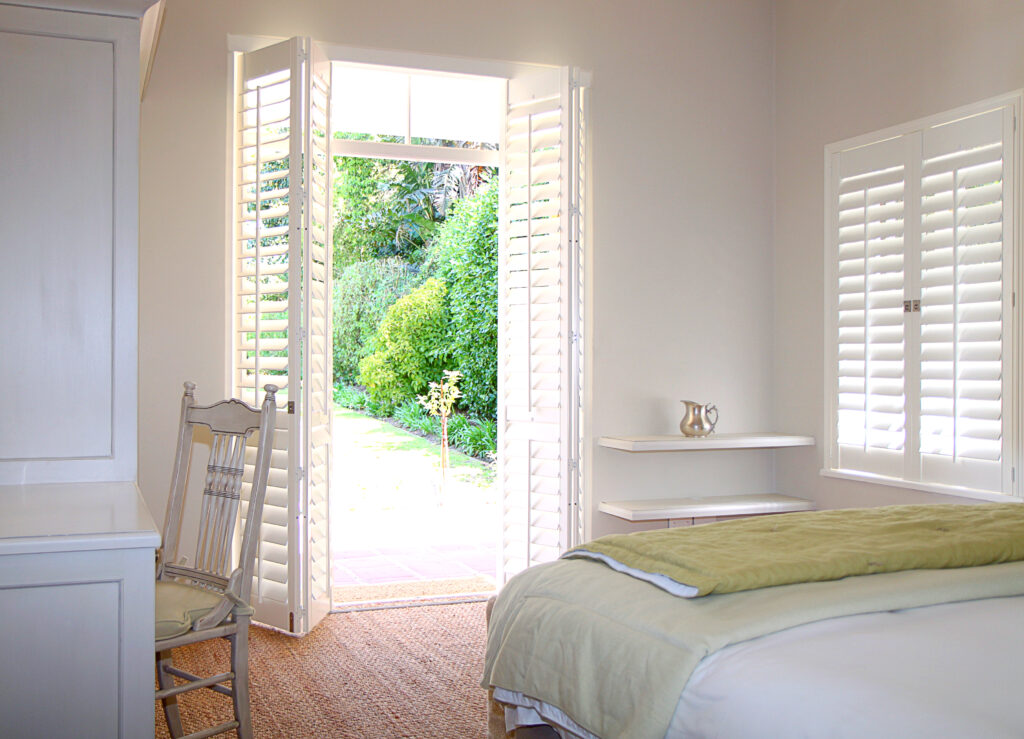
An inside-mounted shutter frame sits within the window opening. This approach can highlight existing trim and create a recessed, built-in appearance, provided the opening has enough depth and is reasonably square. It may be an excellent option when homeowners want to preserve prominent casing or other architectural woodwork.
An outside mount attaches on or beyond the surrounding trim or wall area. During plantation shutter installation in Hamilton, this configuration may be recommended when the window lacks sufficient mounting depth, the opening is noticeably uneven, or internal hardware would interfere with the louvers. An outside mount can also help visually correct irregular openings and provide additional flexibility for certain window types.
Neither method is universally better. The ideal choice depends on the window, desired appearance, existing molding, and operating requirements. A professional can show how different frames will meet the casing and explain how far the treatment may project into the room. Evaluating these details in person is especially useful in homes where original trim or custom millwork should remain visually prominent.
Selecting the Right Louver Size
Louver size changes both the appearance and performance of a shutter. Smaller louvers create more horizontal lines and can suit compact windows or highly traditional rooms. Larger louvers provide a broader view when open and often give the treatment a cleaner, more contemporary scale. The window’s dimensions, ceiling height, room style, and desired visibility all inform the decision.
Planning plantation shutter installation in Hamilton also involves considering how the louvers will interact with the glass and window hardware. Larger louvers need sufficient clearance to rotate fully. If the opening is shallow, a different frame or mounting method may be necessary to provide that space.
Homeowners should view full-size samples whenever possible. A louver that looks oversized in a small sample can appear well proportioned across a large picture window, while a narrow louver may look busier than expected on a wide opening. Seeing the product against the actual window makes it easier to judge scale, sightlines, and the amount of visible landscape beyond the glass.
Panel Layout and Window Access
Panel configuration determines how the shutter looks when closed and how it moves when opened. A narrow window may need one panel, while a wider opening may require two or more. Panels can meet in the center, fold together, or follow another arrangement based on the window and product specifications.
With plantation shutter installation in Hamilton, layout should be planned around the window’s divisions whenever practical. Aligning shutter stiles or panel breaks with existing mullions can produce a calmer, more intentional appearance. The placement of furniture, walls, and nearby fixtures also matters because panels require room to swing.
Access needs differ from room to room. Some homeowners tilt the louvers daily but rarely open the panels. Others need frequent access to locks, screens, or casement cranks. A window above a kitchen sink presents different challenges from a tall window in an open living room. Discussing how the household actually uses each opening helps produce a configuration that is convenient after the installer leaves—not merely attractive in a drawing.
Light Control Throughout the Day
Shutters give homeowners precise control over the direction and amount of daylight. When louvers are open, light can enter while the rigid panels remain in place. Angling the louvers upward or downward can redirect brightness, reduce direct sightlines, and soften glare. Closing them provides stronger coverage when privacy or room darkening is more important.
One advantage of plantation shutter installation in Hamilton is the ability to respond quickly as the sun changes position. East-facing rooms may need control during the morning, while west-facing spaces can experience intense late-day brightness. In a home office, adjusting the louvers may reduce reflections on a monitor without eliminating all natural light. In a family room, the same flexibility can make television viewing more comfortable.
Shutters are not typically intended to create complete blackout conditions because small amounts of light can remain around louvers and panel edges. Homeowners who need an especially dark bedroom or media room should discuss that goal during the consultation. Setting expectations early allows the specialist to recommend the most appropriate solution for the desired level of darkness.
Privacy Without Keeping Rooms Closed Off
Hamilton homeowners may want privacy from a street, neighboring property, walkway, or nearby outdoor living area while still enjoying daylight. Shutters make it possible to obscure direct views without covering the window with an opaque surface all day. A small change in louver angle can substantially affect visibility from outside.
Thoughtful plantation shutter installation in Hamilton considers the height of the window and the direction of common sightlines. In some rooms, dividing the shutter into sections allows the upper and lower louvers to move independently. The lower portion can remain angled for privacy while the upper portion admits more light. This approach can be especially useful in bathrooms, bedrooms, front rooms, and street-facing offices.
Privacy conditions should be assessed at the times they matter most. A treatment that provides comfortable privacy during daylight may behave differently at night when interior lights are on. Testing likely viewpoints and discussing the household’s routines helps determine whether full-height shutters, a divided-louver arrangement, or another configuration will provide the desired balance.
Shutter Materials and Finishes
Shutters are available in different materials, and each option has its own appearance, weight, durability, and suitability for particular environments. Wood provides natural character and can be finished in a range of painted or stained looks. Engineered or composite products may offer additional stability, easy care, or resistance to moisture, depending on their construction.
Choosing materials for custom shutters in a Hamilton home should involve more than matching a paint chip. Window size, room humidity, exposure, panel dimensions, and desired finish all deserve consideration. A product appropriate for a formal dining room may not be the strongest choice for a high-humidity bathroom. Very wide or tall openings may also place different demands on panel construction.
Shutters for Historic and Traditional Properties
The area around Hamilton includes homes with historic influence, detailed casing, deep window openings, and trim worth preserving. Installing a new treatment in these settings requires sensitivity to existing architecture. The objective is to add function without making the window look crowded or obscuring details that give the home its character.
For historic-minded plantation shutter installation in Hamilton, frame profile, louver proportion, hinge visibility, panel divisions, and finish all contribute to authenticity. A restrained design may relate more naturally to traditional millwork than a configuration chosen solely from a catalog image. At the same time, homeowners can still benefit from smooth modern operation and durable current materials.
Older openings may be irregular, and surrounding surfaces may not provide standard mounting conditions. That makes an on-site assessment particularly valuable. Rather than assuming the same solution will work for every window, the specialist can identify which architectural elements should remain visible and which mounting method can deliver a neat, secure fit.
Shutters for Newer and Transitional Interiors
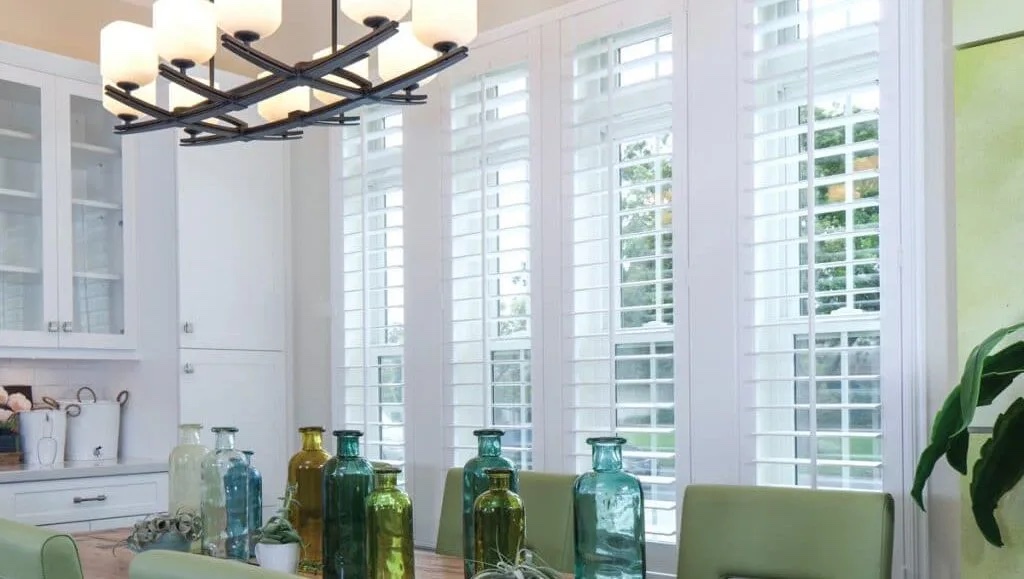
Plantation shutters are equally effective in newer homes. Large louvers, simple frames, and an understated finish can create a crisp look that complements open floor plans and transitional furnishings. Because shutters add structure without requiring elaborate styling, they can keep a room feeling polished and uncluttered.
In newer construction, plantation shutter installation in Hamilton may involve wide windows, paired units, transoms, or large banks of glass. Consistent sightlines become especially important when several treatments are visible from one open living area. Panel divisions and rail positions can be planned to relate to the window architecture and to one another.
Homeowners should also consider future flexibility. A neutral shutter can remain relevant through changes in furniture, paint, rugs, and artwork. The treatment’s permanence makes careful planning worthwhile, but it also means the finished product can become a dependable part of the home’s design rather than an item that needs frequent replacement.
Specialty Windows and Challenging Openings
Arched windows, angled openings, bay windows, corner windows, and other specialty shapes can become standout architectural features when handled correctly. They also introduce technical considerations that standard rectangular openings do not. Panel movement, frame construction, louver clearance, and access to the underlying window must all be evaluated.
Specialized plantation shutter installation in Hamilton may be an attractive option for certain arches and unique shapes because the shutter can follow or complement the architecture. In a bay window, individual sections must be planned so frames meet neatly and panels can operate without colliding. For windows near built-in furniture, sinks, or deep ledges, available clearance influences the design.
Not every shutter configuration is suitable for every specialty opening. A professional can explain which portions will operate, where fixed elements may be required, and how the finished treatment will look from different angles. Reviewing those details before ordering prevents assumptions and helps ensure that a visually impressive solution is also practical.
What to Expect on Installation Day
Once custom shutters have been manufactured, professional installation turns the ordered components into a finished window treatment. The installer verifies the products, protects the immediate work area, positions the frame, checks it for level and square, and secures it according to the opening’s construction. Panels are then hung, aligned, and adjusted so the reveals appear even and the louvers move correctly.
During a plantation shutter installation in Hamilton, small adjustments can make a meaningful difference. Hinges may need refinement, magnets or catches must meet properly, and frames may require careful shimming where the opening is irregular. The installer also checks that panels swing as intended and do not interfere with nearby surfaces.
After installation, homeowners should receive basic operating and care guidance. This is a good time to open the panels, tilt the louvers, ask questions, and inspect the treatment from several positions in the room. Professional completion means more than attaching the frame; it includes confirming that the entire system looks balanced and functions smoothly.
Caring for Custom Plantation Shutters
Routine care is generally simple. A microfiber cloth, soft duster, or suitable vacuum attachment can remove ordinary dust from louvers, frames, and panel edges. Louvers should be supported and handled gently during cleaning rather than forced against their operating mechanism. Cleaning products should always be compatible with the shutter material and finish.
Protecting professionally installed shutters also means using panels and louvers as designed. Homeowners should avoid pulling on a single louver to move the entire section unless the product is intended to operate that way. Furniture and accessories should be positioned so panels can swing without repeated impact.
If alignment changes or hardware becomes loose, it is better to request guidance than make an aggressive adjustment. Many minor concerns can be addressed before they affect other components. Following the manufacturer’s care recommendations helps preserve the finish and dependable operation over time.
Questions to Ask During Your Consultation
A consultation should connect product choices to the home rather than simply presenting a list of available upgrades. Homeowners can prepare by identifying which windows need treatment, which rooms require the most privacy, how often they expect to open the panels, and whether matching existing trim is a priority.
Before ordering plantation shutter installation in Hamilton, consider asking:
- Which shutter material is best suited to this room and window size?
- Is an inside or outside mount more appropriate for the existing trim?
- What louver size fits the scale of the window and desired view?
- How will panel divisions align with the window’s architecture?
- Can the louvers be divided for separate upper and lower control?
- Will the panels clear handles, locks, furniture, and nearby walls?
- How will the chosen finish look from the exterior?
- What care and maintenance does the product require?
- What should be expected during measuring, ordering, and installation?
These questions help homeowners understand not only how the shutters will look, but how they will function in daily life.
The Value of Working With a Local Window Treatment Company
Custom shutters require coordination from the first design conversation through final installation. Working with a knowledgeable local company gives homeowners one resource for product selection, measuring, ordering, and fitting. It also makes it easier to discuss the architectural details and practical concerns common to homes across Northern Virginia.
The Blind, Shade & Shutter Co. provides service throughout Loudoun County, including Hamilton and surrounding communities. The company also works with homeowners in Fairfax County, northern Fauquier County, Prince William County, and Clarke County. This broad local experience includes many home styles, window types, and installation conditions.
An in-home appointment allows the consultant to evaluate sunlight, privacy, trim, window operation, room proportions, and existing finishes where the shutters will actually be installed. Homeowners can compare samples in real lighting and receive recommendations based on their priorities rather than guessing from online images or standard sizes.
Begin Your Hamilton Shutter Project
Custom plantation shutters can bring lasting structure, flexible light control, privacy, and a polished architectural finish to a home. Achieving that result requires the right combination of design decisions and technical precision—from material and louver selection to measurement, framing, panel layout, and final adjustment.
Homeowners planning plantation shutter installation in Hamilton can rely on The Blind, Shade & Shutter Co. for personalized assistance and professional installation. Whether the project involves a single specialty window, several street-facing rooms, or coordinated treatments throughout the home, the process begins with understanding how each space needs to look and function.
To schedule a consultation in Hamilton or elsewhere within the company’s Northern Virginia service area, call 703-669-2400 or email info@blindsco.com. A professional can help you explore materials, finishes, louver
Comments are closed