
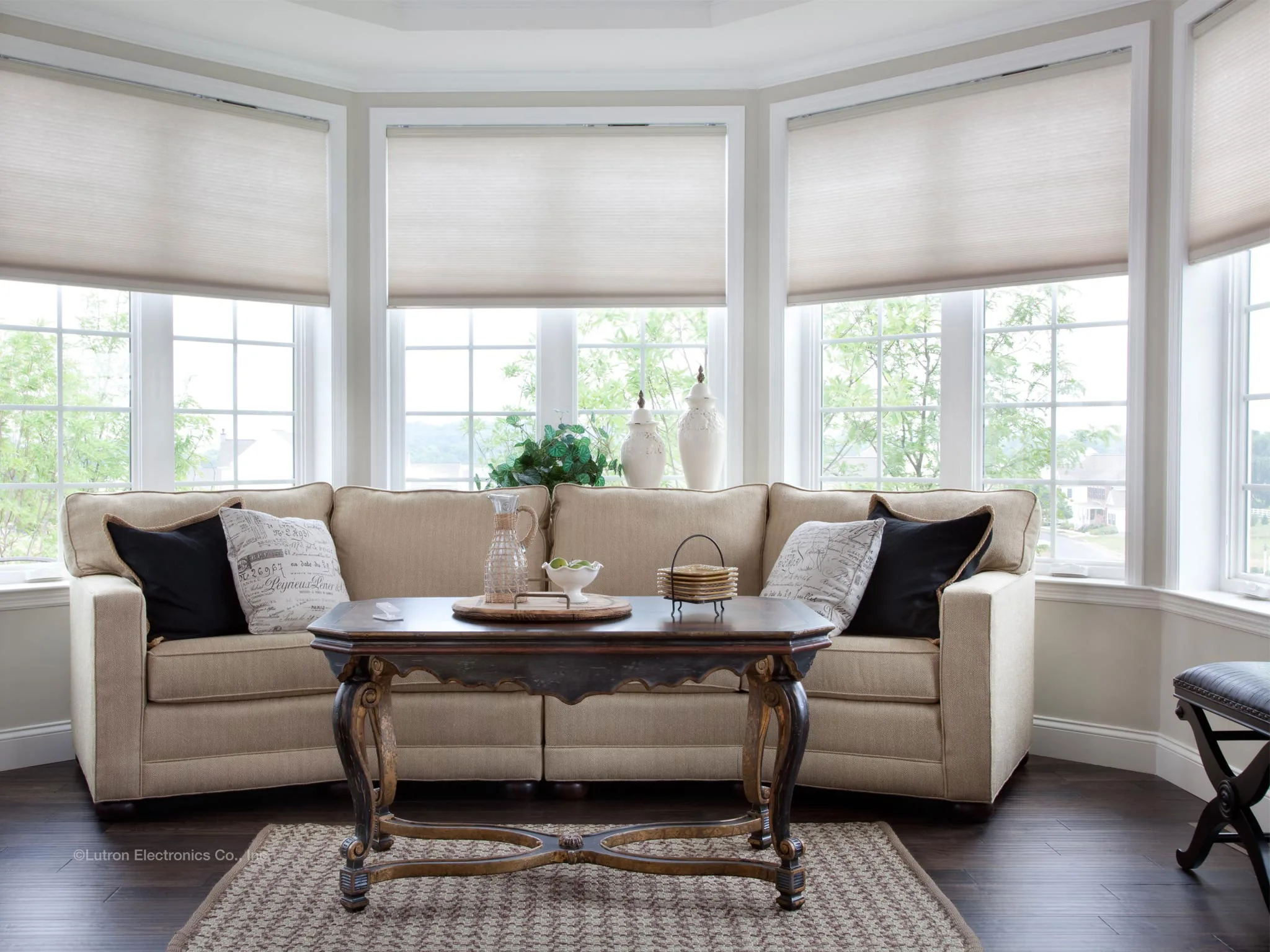
Homeowners in South Riding, Virginia, know how dramatically the weather can change throughout the year. Hot, humid summers bring intense afternoon sunshine, while chilly winter mornings can make certain rooms feel noticeably colder. Maintaining a comfortable indoor temperature can be challenging, especially in homes with large windows, open floor plans, and rooms that receive direct sunlight.
Choosing energy-efficient window shades in South Riding is a practical way to improve indoor comfort, manage natural light, and reduce unnecessary heating and cooling demands. The right window treatments help control solar heat gain during warmer months and provide an additional layer of insulation when temperatures drop.
At The Blind, Shade & Shutter Co., we help homeowners throughout South Riding and the surrounding Northern Virginia communities find custom window treatments that balance energy efficiency, privacy, functionality, and design. Whether you’re updating a single sun-filled room or selecting window coverings for an entire house, understanding your options can help you make a confident investment.
In this guide, we’ll explore how energy-efficient shades work, which styles offer the greatest benefits, how to select the right products for different rooms, and why professional measurements and installation matter.
Why Energy Efficiency Matters for South Riding Homes
South Riding is a thriving residential community in Loudoun County, with a variety of home styles ranging from townhomes to spacious single-family properties. Many homes feature large windows, multiple stories, and open living spaces designed to maximize natural light.
While these architectural features create bright and welcoming interiors, they can also introduce temperature-control challenges.
Hot Northern Virginia Summers
Summer temperatures in Northern Virginia frequently climb into the upper 80s and 90s, often accompanied by high humidity.
Windows exposed to direct sunlight can allow significant solar heat to enter a home, particularly during the afternoon. This additional heat can make rooms uncomfortable and increase the amount of work required from an air-conditioning system.
Installing energy-efficient window shades in South Riding can help reduce unwanted solar heat gain by limiting the amount of sunlight and radiant heat entering through windows.
The results may include more consistent indoor temperatures, improved comfort in sun-facing rooms, and reduced reliance on air conditioning.
Cold Winter Temperatures
Although Northern Virginia winters are generally milder than those farther north, freezing temperatures and occasional snowstorms are common.
Windows can contribute to winter heat loss, even when they are properly installed and sealed.
Insulating window shades create an additional barrier between the interior living space and the glass. This barrier can help slow heat transfer and make rooms feel more comfortable during colder weather.
Year-Round Energy Management
Effective window treatments should address both summer heat and winter cold.
For South Riding homeowners, the goal is not necessarily to block sunlight all year. Instead, it’s to control when and how sunlight enters the home.
During summer, closing shades on sun-exposed windows can help limit heat gain. During winter, opening shades during sunny periods may allow beneficial warmth to enter, while closing them after sunset can help reduce heat loss.
This seasonal flexibility makes energy-efficient shades valuable throughout the year.
How Energy-Efficient Window Shades Work
Not all window coverings provide the same level of thermal performance.
The effectiveness of a shade depends on several factors, including its material, construction, fit, opacity, and how it is operated throughout the day.
Understanding these differences is essential when comparing energy-efficient window shades in South Riding.
Reducing Solar Heat Gain
Solar heat gain occurs when sunlight passes through window glass and warms interior surfaces.
Furniture, flooring, and other materials absorb that energy and release it as heat, potentially increasing indoor temperatures.
Window shades can reduce this effect by blocking, filtering, or reflecting incoming sunlight.
The amount of protection depends on the shade’s fabric, color, and construction. Certain light-colored or reflective materials are particularly useful for reducing solar heat gain.
Creating an Insulating Air Layer
Some shades improve thermal performance by trapping air between the window and the room.
Air pockets help slow heat transfer, reducing the movement of heat through the window area.
This principle is especially important for cellular shades, which feature a honeycomb structure designed to hold air within individual cells.
Controlling Light Without Sacrificing Comfort
Energy efficiency doesn’t always require a completely dark room.
Many homeowners want natural light during the day without the uncomfortable heat or glare that can accompany direct sunlight.
Light-filtering fabrics can soften incoming sunlight while helping control brightness and, depending on their specifications, solar heat gain.
The ideal material depends on the direction a window faces, the room’s purpose, and the homeowner’s preferences.
Cellular Shades: A Leading Choice for Insulation


Cellular shades, also called honeycomb shades, are among the most recognizable insulating window treatments available.
Their distinctive construction makes them especially appealing to homeowners looking to improve comfort without compromising appearance.
What Makes Cellular Shades Different?
Unlike a flat piece of fabric, cellular shades contain rows of hollow pockets.
When viewed from the side, these pockets resemble a honeycomb.
The pockets trap air, creating an insulating layer that helps reduce heat transfer through the window area.
Depending on the product, cellular shades may feature single-cell, double-cell, or other specialized constructions.
For homeowners researching energy-efficient window shades in South Riding, cellular shades are often an excellent starting point because their design specifically addresses insulation.
Single-Cell vs. Double-Cell Shades
Single-cell shades contain one layer of air pockets. They provide insulation while maintaining a relatively lightweight profile.
Double-cell shades contain two layers of cells, potentially offering additional insulation depending on the product’s specifications.
However, cell count alone doesn’t determine performance. Fabric properties, cell dimensions, installation fit, and manufacturer testing also matter.
A professional consultation can help homeowners compare products based on their actual performance rather than appearance alone.
Light-Filtering Cellular Shades
Light-filtering cellular shades are popular in living rooms, kitchens, dining areas, and other spaces where natural daylight is desirable.
They diffuse sunlight, creating a softer indoor atmosphere while maintaining an insulating air layer.
Available in a range of colors and textures, these shades complement traditional, transitional, and contemporary interiors.
Room-Darkening Cellular Shades
Bedrooms often require greater light control.
Room-darkening cellular shades use more opaque materials to significantly reduce incoming light.
They can be particularly helpful for bedrooms that face east and receive early morning sunlight or west-facing rooms exposed to intense afternoon sun.
Because small amounts of light can enter around the edges, homeowners seeking maximum darkness should also consider installation details and optional side-channel systems where available.
Top-Down/Bottom-Up Cellular Shades
Some cellular shades feature top-down/bottom-up operation.
This design allows homeowners to lower the top of the shade, raise the bottom, or adjust both sections independently.
It’s particularly useful in South Riding neighborhoods where homes are relatively close together.
Homeowners can maintain privacy at eye level while allowing daylight through the upper portion of the window.
Roller Shades for Modern Energy Efficiency


Roller shades offer a streamlined appearance and a wide range of fabric options.
Their simple construction makes them well suited to modern interiors, large windows, and spaces where homeowners prefer a clean, understated look.
When evaluating energy-efficient window shades in South Riding, it’s important to understand that the performance of roller shades depends heavily on the fabric selected.
Solar-Reflective Fabrics
Certain roller shade fabrics are designed to reflect a portion of incoming solar energy.
These materials can help reduce heat buildup in rooms exposed to direct sunlight.
Light-colored fabrics with reflective properties may be particularly effective, although performance varies by manufacturer and material.
Solar Shades for Glare Reduction
Solar shades are designed to filter sunlight while often preserving some outward visibility.
They are commonly available in different openness factors, such as 1%, 3%, 5%, and 10%.
The openness factor describes the approximate percentage of open space within the fabric weave.
Generally, lower openness factors provide greater glare reduction and less outward visibility, although the fabric’s color and construction also affect performance.
Solar shades can be useful in home offices, living rooms, and spaces with large windows overlooking outdoor areas.
However, homeowners should understand that solar shades do not provide the same level of nighttime privacy as opaque window coverings when interior lights are on.
Blackout Roller Shades
For bedrooms, media rooms, and other areas requiring substantial light control, blackout roller fabrics offer another option.
These fabrics block light passing directly through the material, although light may still enter around the edges.
Depending on the fabric and installation, they can also help manage solar heat gain.
A professional can help determine whether roller shades or cellular shades better suit a particular room’s insulation and light-control needs.
Roman Shades and Layered Fabric Options
Roman shades combine the softness of fabric with the functionality of an adjustable window covering.
When raised, the fabric gathers into horizontal folds. When lowered, it creates a relatively continuous covering over the window.
For homeowners seeking energy-efficient window shades in South Riding with a more decorative appearance, Roman shades can be an appealing choice.
Fabric Weight and Construction
Roman shades are available in numerous fabric weights, textures, and colors.
Heavier or lined fabrics may provide additional resistance to heat transfer compared with lightweight, unlined materials.
However, not every Roman shade is specifically designed or tested for energy efficiency.
Homeowners should evaluate the complete product construction, including lining, fit, and fabric properties.
Combining Privacy and Light Control
Roman shades can provide varying degrees of privacy depending on the selected fabric.
Light-filtering materials soften sunlight while allowing some natural brightness into the room.
More opaque materials offer greater privacy and light reduction.
These options make Roman shades suitable for dining rooms, living spaces, and bedrooms where appearance and functionality are equally important.
Choosing the Right Style
Roman shades work particularly well in homes with traditional or transitional architecture.
Neutral fabrics can create a timeless appearance, while textured materials add visual interest.
The key is selecting a product that complements the room while meeting practical requirements for light control and comfort.
Motorized Window Shades: Smarter Comfort Throughout the Day


One of the most useful developments in window treatment technology is motorization.
Motorized shades allow homeowners to adjust their window coverings using a remote control, wall switch, or compatible smart-home system.
Depending on the product and system, some shades can also operate according to programmed schedules.
Why Motorization Can Improve Energy Management
Even highly insulating shades cannot deliver their full potential if they’re consistently left open during periods of intense sunlight.
Motorization makes it easier to manage shades throughout the day.
For example, homeowners might program compatible shades to close during the hottest afternoon hours in summer and reopen when direct sunlight is no longer a concern.
In winter, shades can be opened during sunny periods to take advantage of natural warmth and closed in the evening to help retain indoor heat.
This makes motorized energy-efficient window shades in South Riding particularly appealing to homeowners who want convenient, consistent light and temperature management.
Convenient Control for Hard-to-Reach Windows
Many Northern Virginia homes feature two-story foyers, tall living-room windows, or windows positioned above staircases.
Manually adjusting coverings in these locations can be inconvenient.
Motorization provides a practical solution, allowing homeowners to operate difficult-to-reach shades without ladders or extension tools.
Smart-Home Integration
Some motorized window treatment systems can integrate with compatible smart-home platforms.
Depending on the equipment, homeowners may be able to create schedules, control multiple shades together, or use voice commands.
Compatibility varies, so it’s important to verify the available features before selecting a motorized system.
Cordless Convenience
Motorized shades also eliminate the need for traditional operating cords.
This can create a cleaner appearance and offer a convenient operating option for households with children or pets.
Choosing Energy-Efficient Shades for Different Rooms
Every room has different requirements.
A bright home office may need glare reduction, while a bedroom may benefit more from insulation and room-darkening performance.
Selecting the right energy-efficient window shades in South Riding involves evaluating each room individually rather than choosing one identical product for every window.
Living Rooms
Living rooms often feature some of the largest windows in a home.
These windows may provide beautiful natural light but can also contribute to unwanted heat gain.
Cellular shades offer insulation, while selected roller and solar shades provide flexible light control.
For rooms with attractive outdoor views, solar shades may help manage glare while maintaining some visibility.
Bedrooms
Bedrooms benefit from a combination of privacy, insulation, and light control.
Room-darkening cellular shades are a strong option because they combine an insulating structure with substantial light reduction.
Blackout roller shades may also be appropriate when darkness is the primary goal.
Homeowners who are sensitive to morning sunlight should pay particular attention to edge gaps and installation methods.
Home Offices
With more people working remotely or maintaining dedicated home offices, controlling glare has become increasingly important.
Direct sunlight can make computer screens difficult to see and create uncomfortable temperature fluctuations.
Solar shades or light-filtering roller shades can help manage brightness without making the workspace feel completely closed off.
Kitchens
Kitchens require window treatments that balance light control with easy maintenance.
Roller shades are often appealing because of their simple design and available performance fabrics.
Material selection matters in areas exposed to cooking moisture or splashes, so homeowners should review manufacturer cleaning and placement recommendations.
Bathrooms
Bathrooms require privacy and materials suited to potentially humid environments.
Certain cellular and roller shade materials may be appropriate, depending on their specifications.
Because not all fabrics tolerate moisture equally, product selection should account for the bathroom’s ventilation and proximity to showers or tubs.
Sunrooms and Large Window Areas
Sunrooms and rooms with extensive glass can experience significant temperature fluctuations.
Solar shades may help control glare and solar heat gain, while cellular shades provide insulation when closed.
The best solution depends on whether the homeowner prioritizes outward visibility, daytime comfort, or nighttime insulation.
Why Window Direction Matters in South Riding
The direction a window faces can significantly affect its exposure to sunlight.
A thoughtful window treatment plan considers orientation as well as room function.
South-Facing Windows
South-facing windows often receive substantial sunlight, particularly during winter when the sun is lower in the sky.
This can provide useful passive solar warmth during colder months.
Adjustable shades allow homeowners to take advantage of winter sunshine while reducing unwanted heat gain when conditions are warmer.
West-Facing Windows
West-facing windows can be especially challenging during Northern Virginia summers.
Late-afternoon sunlight often enters when outdoor temperatures are already high.
Rooms with these windows may benefit from shades designed to reduce solar heat gain, particularly when operated before the room becomes excessively warm.
East-Facing Windows
East-facing windows receive morning sunlight.
This can be pleasant in kitchens and breakfast areas but disruptive in bedrooms where early morning brightness is undesirable.
Room-darkening cellular shades or blackout roller shades may provide a useful solution.
North-Facing Windows
North-facing windows generally receive less direct sunlight throughout much of the year.
For these windows, insulation and privacy may be more important considerations than solar heat control.
Cellular shades can help address comfort concerns while allowing homeowners to choose the desired amount of daylight.
Understanding orientation is an important part of selecting energy-efficient window shades in South Riding, particularly for homes with windows facing multiple directions.
Custom Window Shades vs. Ready-Made Window Coverings
Homeowners can purchase ready-made shades from many retail stores, but custom window treatments offer important advantages.
These differences become especially relevant when insulation and light control are priorities.
More Precise Measurements
Window openings vary in width, height, depth, and shape.
Even windows that appear identical may have small dimensional differences.
Custom measurements help ensure that each shade fits its intended opening.
A better fit can reduce unnecessary gaps and improve the overall appearance of the installation.
Better Control of Edge Gaps
Gaps between the shade and window frame can allow sunlight and heat to bypass the covering.
While some gaps are unavoidable, especially with certain inside-mounted shades, careful product selection and measurement can help minimize them.
For insulating cellular shades, fit is an important consideration because air movement around the edges can affect thermal performance.
More Fabric and Color Options
Custom window treatments typically offer a broader selection of materials, colors, textures, and operating systems.
Homeowners can compare light-filtering, room-darkening, and specialty performance fabrics based on their specific needs.
Professional Product Recommendations
Energy efficiency isn’t determined by appearance alone.
A professional can explain the differences between available shade constructions and help homeowners understand which options best match their priorities.
This is particularly useful when comparing insulation, glare reduction, privacy, and motorization.
Understanding Window Shade Energy Performance
Homeowners often ask how much money energy-efficient shades can save.
The answer depends on several factors, including window construction, local weather, shade performance, installation, and daily operating habits.
According to the U.S. Department of Energy, properly installed cellular shades can significantly reduce heat loss through windows.
The department reports that tightly installed cellular shades can reduce heat loss through windows by 40% or more during the heating season, depending on the product and conditions. This is a reduction in heat loss through the window, not a guaranteed reduction in a home’s overall heating bill.
Important Factors Affecting Savings
The potential benefits of energy-efficient shades depend on:
- The size and number of windows.
- Existing window insulation and glazing.
- Window orientation and sun exposure.
- The shade’s construction and thermal properties.
- How closely the shade fits the opening.
- How consistently shades are opened and closed.
- The home’s heating and cooling systems.
For homeowners comparing energy-efficient window shades in South Riding, it’s helpful to focus on verified product characteristics and realistic comfort improvements rather than expecting a specific percentage reduction in utility bills.
Energy Efficiency and Existing Windows
Window shades can improve comfort without requiring homeowners to replace otherwise functional windows.
However, shades are not a substitute for repairing damaged seals, addressing significant air leaks, or correcting other window problems.
They work best as part of a broader approach to managing indoor temperatures.
Long-Term Value
High-quality custom shades can provide value beyond potential energy savings.
Benefits may include improved privacy, better light control, reduced glare, protection for interior furnishings, and easier daily operation.
For many homeowners, the combination of comfort, convenience, and appearance is just as important as the potential impact on utility expenses.
How Window Shades Help Protect Furniture and Flooring
Sunlight can gradually affect the appearance of interior materials.
Over time, exposure to ultraviolet radiation and visible light may contribute to fading or discoloration of furniture, flooring, and other surfaces.
Certain window shade materials are designed to reduce UV transmission.
Protecting Hardwood Floors
Hardwood flooring exposed to direct sunlight may change color over time.
Shades that reduce incoming UV radiation and direct sunlight can help limit exposure, although they cannot eliminate all fading.
Preserving Furniture
Upholstered furniture and other interior materials can also be affected by prolonged sunlight.
Using shades during peak exposure periods helps reduce the amount of light reaching these surfaces.
Balancing Protection With Natural Light
Homeowners don’t necessarily need to keep their windows covered all day.
Light-filtering and solar shade fabrics provide different levels of light transmission, allowing homeowners to choose an appropriate balance between brightness and protection.
Window Treatments for South Riding’s Different Home Styles
South Riding includes a range of residential designs, and the ideal window treatment should complement the home’s architecture.
Townhomes
Townhomes may have windows positioned close to neighboring properties.
Privacy is often a priority, particularly in front-facing living rooms and bedrooms.
Top-down/bottom-up cellular shades can be especially useful because they allow daylight to enter while keeping the lower portion of the window covered.
Single-Family Homes
Larger single-family homes may feature multiple window sizes, expansive living areas, and rooms with different sun exposures.
These homes benefit from a coordinated approach that considers each room’s function.
Homeowners can maintain a consistent color palette while selecting different shade materials and operating systems throughout the house.
Homes With Open Floor Plans
Open-concept living spaces often contain windows on multiple walls.
Sunlight can move across these rooms throughout the day, creating changing patterns of glare and warmth.
Coordinated shades, particularly motorized options, make it easier to manage several windows together.
Homes With Tall or Specialty Windows
Large windows and unusual architectural openings require careful measurement.
Depending on the product and opening, custom solutions may be available for tall, wide, or specialty-shaped windows.
Professional guidance helps homeowners understand which configurations are practical and appropriate.
Energy-Efficient Window Shades Throughout Loudoun County
Although South Riding is an important community within Loudoun County, homeowners throughout the region experience similar seasonal challenges.
The Blind, Shade & Shutter Co. serves customers across Loudoun County and surrounding Northern Virginia areas.
Chantilly and Nearby Communities
Homeowners in South Riding and neighboring Chantilly often seek window treatments that improve comfort in bedrooms, living rooms, and home offices.
Cellular shades and solar-control roller shades can be useful options for managing seasonal sunlight.
Ashburn and Brambleton
Homes in Ashburn and Brambleton may feature expansive windows and open living spaces.
Motorized shades can provide convenient control for larger window arrangements, while cellular shades offer insulation and privacy.
Aldie and Stone Ridge
In Aldie and Stone Ridge, homeowners may be selecting window coverings for newer homes or updating existing treatments.
Custom measurements and material selection can help address the unique requirements of each room.
Leesburg and Western Loudoun
Homes in Leesburg and western Loudoun County range from established residences to newer developments.
Window treatment needs vary based on architecture, window placement, and exposure to sunlight.
Custom shades allow homeowners to select products that complement their interiors while improving everyday comfort.
Serving Fairfax, Prince William, Fauquier, and Clarke Counties
The Blind, Shade & Shutter Co. also serves communities beyond Loudoun County.
Our service area includes Fairfax County, Prince William County, northern Fauquier County, and Clarke County.
Fairfax County
Homeowners in Fairfax County communities such as Centreville, Herndon, Reston, and Fairfax can benefit from window treatments designed for the region’s seasonal weather.
Whether the priority is reducing afternoon glare or improving bedroom insulation, custom shades offer flexible solutions.
Prince William County
In Prince William County, communities such as Gainesville, Haymarket, and Manassas feature homes with a wide variety of window configurations.
Homeowners may choose cellular shades for insulation, roller shades for a streamlined appearance, or motorized treatments for convenience.
Northern Fauquier County
Homes in northern Fauquier County may include larger window openings, distinctive architectural features, or expansive outdoor views.
Custom shades can help balance privacy and sunlight control without unnecessarily obstructing those views.
Clarke County
Clarke County homeowners also experience seasonal temperature changes that make window insulation and solar control valuable considerations.
Carefully selected window treatments can improve comfort while complementing both traditional and contemporary home designs.
Across these communities, the goal remains the same: selecting window coverings that fit properly, function reliably, and meet the homeowner’s needs.
Common Mistakes to Avoid When Choosing Energy-Efficient Shades
Choosing the right window treatments requires more than selecting a color or fabric.
Several common mistakes can limit the benefits of an otherwise high-quality product.
Selecting Shades Based Only on Appearance
A beautiful shade may not provide the insulation or solar protection a homeowner expects.
It’s important to understand the material’s functional properties before making a decision.
Ignoring Window Orientation
Using the same fabric on every window may not be ideal.
A west-facing living room and a north-facing bedroom can have very different requirements.
Overlooking Privacy Needs
Some solar shade fabrics provide daytime outward visibility but limited nighttime privacy.
Homeowners should consider how a fabric performs under different lighting conditions.
Choosing the Wrong Mounting Style
Inside-mounted shades provide a clean, integrated appearance but may leave small gaps around the edges.
Outside-mounted shades can provide additional coverage, depending on the window and surrounding wall space.
Neither approach is universally better. The right choice depends on the product, window construction, and homeowner’s priorities.
Forgetting About Daily Operation
A shade only helps manage sunlight when it’s used appropriately.
For windows that are difficult to reach or frequently adjusted, motorization may improve convenience and consistency.
Skipping Professional Measurements
Small measurement errors can affect shade operation, appearance, and coverage.
Professional measurements help reduce the risk of ordering products that don’t fit properly.
Avoiding these mistakes is an important step when investing in energy-efficient window shades in South Riding.
What to Expect During a Professional Window Shade Consultation
Selecting custom window treatments should be a straightforward and informative experience.
A professional consultation provides an opportunity to discuss your goals, compare products, and identify appropriate options.
Step 1: Discuss Your Priorities
The first step is understanding what you want your window treatments to accomplish.
Common priorities include reducing summer heat, improving winter comfort, increasing privacy, controlling glare, and updating the appearance of a room.
You may have different priorities for different windows.
Step 2: Evaluate the Windows
Window dimensions, depth, orientation, and accessibility all affect product selection.
A professional can assess these details and recommend suitable mounting and operating options.
Step 3: Compare Shade Styles
Homeowners can explore cellular, roller, solar, Roman, and other available shade options.
Fabric samples help illustrate differences in color, texture, opacity, and light filtration.
Step 4: Review Operating Options
Depending on the product, shades may be available with cordless manual operation, motorization, or other control systems.
The best choice depends on window accessibility, convenience, and budget.
Step 5: Take Accurate Measurements
Precise measurements are essential for custom window treatments.
Proper sizing supports smooth operation, attractive installation, and appropriate window coverage.
Step 6: Professional Installation
Installation is the final step in creating a functional window treatment solution.
Correct mounting and adjustment help ensure that shades operate as intended.
Frequently Asked Questions About Energy-Efficient Window Shades
What type of window shade is best for insulation?
Cellular shades are generally among the strongest choices for insulation because their honeycomb construction traps air.
However, performance varies by product, and the best choice depends on the window, desired light control, and installation.
Do energy-efficient window shades really reduce utility bills?
They can help reduce heating and cooling demands by limiting heat transfer and controlling solar heat gain.
Actual savings vary based on the home, windows, climate, shade construction, and how the shades are used.
Are cellular shades better than roller shades?
Cellular shades are typically better suited to applications where insulation is the main priority.
Roller shades offer a streamlined appearance and a variety of solar-control fabrics.
The better option depends on whether insulation, glare reduction, outward visibility, or appearance is most important.
Can I still get natural light with energy-efficient shades?
Yes. Many cellular and roller shades are available in light-filtering fabrics.
These materials allow diffused daylight into a room while offering varying degrees of privacy and solar control.
Are motorized shades worth considering?
Motorized shades can be particularly useful for large windows, hard-to-reach openings, and homeowners who want convenient operation.
Scheduled adjustments may also help homeowners manage sunlight more consistently.
What are the best shades for west-facing windows?
West-facing windows often receive strong afternoon sunlight.
Solar-control roller shades and appropriately selected cellular shades can help reduce glare and unwanted heat gain.
The ideal product depends on the desired balance of insulation, privacy, and light transmission.
Can window shades help with winter drafts?
Insulating shades can reduce heat transfer and may improve comfort near cold windows.
However, they do not repair air leaks or replace proper window sealing.
If a window has significant drafts, those issues should also be addressed.
Should every window in my house have the same type of shade?
Not necessarily.
Different rooms and window orientations have different requirements.
A coordinated design can include several shade types while maintaining a consistent appearance throughout the home.
How do I clean energy-efficient window shades?
Cleaning requirements depend on the material and manufacturer.
Some shades can be maintained through gentle dusting or vacuuming with an appropriate attachment.
Always follow the manufacturer’s care instructions, especially for specialty fabrics and cellular constructions.
Are custom shades better for large windows?
Custom shades can be especially useful for large windows because they are measured and manufactured for the opening.
Product size limitations, mounting requirements, and operating systems should be reviewed before ordering.
Why Choose The Blind, Shade & Shutter Co.?
Finding the right window treatments involves more than choosing a product from a catalog.
Homeowners need solutions that complement their interiors, provide appropriate privacy, and address the practical challenges of Northern Virginia’s changing seasons.
At The Blind, Shade & Shutter Co., we help customers explore custom blinds, shades, and shutters suited to their individual needs.
Our focus is on helping homeowners make informed decisions about materials, light control, appearance, and functionality.
Local Knowledge
South Riding and the surrounding communities experience hot summers, cold winters, and substantial seasonal changes in sunlight.
Understanding these local conditions helps guide recommendations for different window exposures and room requirements.
Custom Solutions
Every home is different.
Custom window treatments allow homeowners to select the materials, dimensions, colors, and operating options that best suit their spaces.
Attention to Functionality
An attractive window covering should also work well.
We help homeowners consider everyday operation, privacy, sunlight exposure, and comfort when comparing available options.
Service Throughout Northern Virginia
The Blind, Shade & Shutter Co. serves homeowners in Loudoun County, Fairfax County, Prince William County, northern Fauquier County, and Clarke County.
Whether you’re in South Riding or a neighboring community, our team can help you explore window treatment options for your home.
Schedule a Consultation for Energy-Efficient Window Shades in South Riding
Your windows play an important role in how your home looks, feels, and functions throughout the year.
The right shades can help reduce uncomfortable solar heat gain, improve insulation, control glare, protect interior furnishings, and provide the privacy your household needs.
From insulating cellular shades to solar-control roller shades and convenient motorized options, there are solutions for a wide range of window sizes, home styles, and budgets.
If you’re considering energy-efficient window shades in South Riding, The Blind, Shade & Shutter Co. can help you compare available products and choose custom window treatments designed around your home’s needs.
Whether you’re upgrading a sunny living room, improving bedroom comfort, or selecting shades for an entire property, our team is ready to help you find the right combination of performance and style.
Contact The Blind, Shade & Shutter Co. today to schedule your complimentary in-home consultation and receive a customized quote.
Phone: 703-669-2400
Email: info@blindsco.com
Serving: South Riding, Loudoun County, Fairfax County, Prince William County, northern Fauquier County, Clarke County, and surrounding Northern Virginia communities.
Comments are closed