
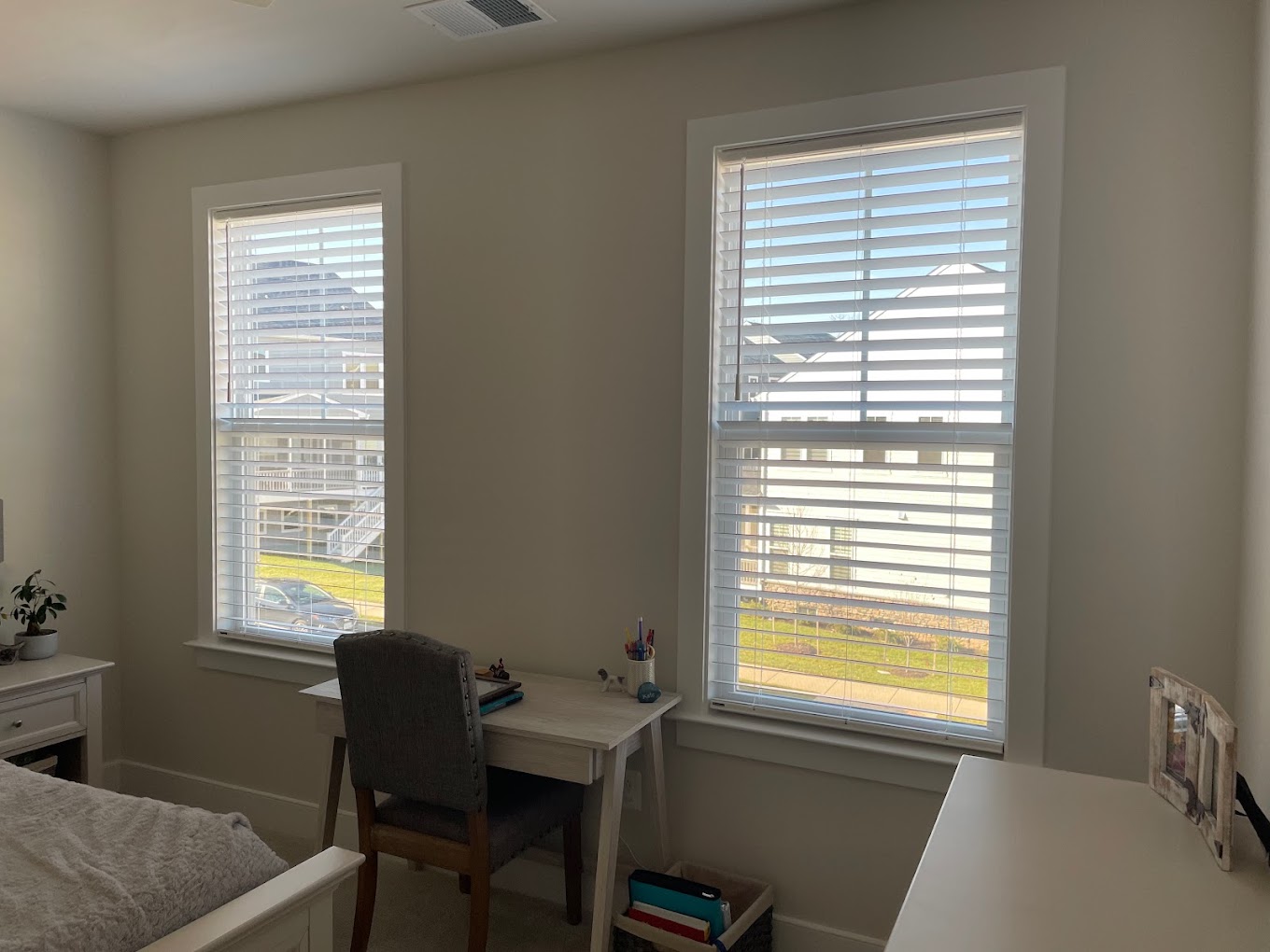
If you’re wondering “how much do custom blinds cost in Northern Virginia?” a national planning range is $70 to $600 per window installed, according to HomeGuide. Where your project lands depends on the size of each opening, the blind material, the controls, and the installation. That range is a starting point for budgeting. The Blind, Shade & Shutter Co. prepares a custom quote based on your windows and the options you select.
Consider two homes with eight windows each. One in Ashburn might have eight similar openings and use the same cordless faux wood blind throughout. Another in Great Falls might have five standard windows, a wide picture window that needs two blinds, and a pair of high windows that require special access. Both owners have eight windows, but the second project could require more blinds, different hardware, and a different installation plan. The number of openings gives you a rough sense of the project. What goes into each opening tells you far more about the cost.
What an Installed Price per Window Actually Covers
When people ask “how much do custom blinds cost per window?” they’re often comparing a price they saw online with a quote that covers the entire job. The price you see online may apply to a particular size, finish, and control option. An installed quote should identify the exact blind, the hardware or accessories needed to mount it, and the installation work. Ask whether measuring, delivery, removal of old blinds, and any applicable taxes are included in the total or listed separately.
It also helps to look at what’s being counted. A wide opening divided by a center mullion, the strip separating two panes, might take two independently operated blinds. A set of three windows in a bay might require three units and enough room between them for each one to work. A sliding glass door often calls for a separate product with a track. A quote that identifies each opening and the number of units assigned to it makes these decisions easy to see and gives you a better basis for comparing options.
How Window Size and Mounting Affect Your Quote
Width and height can change the product you need
Asking “how much do custom blinds cost for a large window?” means looking beyond square footage. As horizontal blinds get wider or taller, the weight of the slats and the demands on the lift system increase. Each product line has limits for width, height, or overall size, and those limits can vary with the type of control. A material you like in a bedroom may work across a living room window only if the opening is divided into two units.
Two blinds can also be a practical choice when an opening has two usable sections. In a Fairfax County home office, for instance, you might tilt the blind closest to your monitor while leaving the other section open. The trade-off is a visible division and an additional set of controls. If you have a broad opening, ask the installer to show you where the split would sit and whether it would line up with an existing frame division before you compare the cost of the two layouts.
Recess depth, trim, and window hardware determine the mount
If you’re asking “how much do custom blinds cost for shallow windows?” the first question is where the brackets can go. An inside mount places the blind within the opening and leaves the surrounding trim visible. The blind needs enough depth for its brackets and headrail, plus room to clear locks, handles, and crank mechanisms. Some products can be mounted in a shallow recess with the headrail projecting slightly. Others work better mounted above or on the face of the opening.
An outside mount can also provide more overlap along the sides of the window, which can be useful when nearby homes or sidewalks affect privacy. The installer measures the desired coverage and checks for a secure mounting surface. That layout can change the finished size or call for different hardware. In an older Hamilton or Waterford home, two windows might look identical from across the room but have different depths because of replacement sashes or layers of trim. Measuring each opening gives you a quote based on what can actually be installed.

Which Blind Materials Fit Your Budget?
Faux wood blinds for a consistent look
Homeowners asking “how much do custom blinds cost for an entire floor?” often start with faux wood. It’s a practical material to price across bedrooms, kitchens, and family rooms when you want a consistent slat finish. Depending on the product, you can choose smooth whites or finishes with a more visible grain. Compare samples against your actual trim, especially if you’re trying to carry one finish from a sunny kitchen to a shaded front room.
Faux wood can be worth considering in rooms where the air gets humid, such as a bathroom with a frequently used shower. Check the manufacturer’s guidelines for the specific product and the conditions at the window. On wider openings, ask about weight and operating limits, particularly if you plan to raise the blind often. A white faux wood blind that makes sense for a series of regular windows in a Purcellville home may need a split configuration on one unusually wide opening. Price that opening separately so you can see the effect on the project.
Real wood blinds for visible grain and a coordinated finish
If you’re asking “how much do custom blinds cost in real wood?” request a comparison using the same opening, slat size, and basic controls. That way, you’ll see the price difference for the material and finish you actually want. Real wood is often a higher-priced option. Its natural grain is especially visible in stained finishes, which may be worth prioritizing in a study, dining room, or other space where the blinds sit close to stained trim or built-in shelving.
Look at a full slat sample in the room. A stain that seems warm in the showroom can look darker once it’s repeated across a wall of windows. Also consider what you’ll see from outside if the windows face the street. If the quote is higher than your budget allows, ask about using real wood in the rooms where the grain matters most and a coordinating finish elsewhere. Compare those choices at windows that sit side by side so any difference in color, sheen, or slat profile is intentional.
Aluminum blinds for slim slats and smaller openings
For someone asking “how much do custom blinds cost for a few small windows?” aluminum is a sensible option to include in the quote. Its slim slats can suit a utility room, bathroom, or office where you want adjustable light and a relatively compact profile. In a Reston condo, for example, a shallow opening may favor a compact blind if the selected product’s headrail and brackets fit the available depth. Compare the full mounting requirements, since the slat size alone tells you only part of the story.
Aluminum pricing still varies by product line, finish, and features. Look at how the blind tilts, how much of the glass the slats cover when closed, and the appearance of the headrail when the blind is raised. If the window needs to open frequently or sits next to a door, check how the blind will clear the handle and whether it needs to be raised before you reach the latch. An accessible control can make a basic blind easier to live with every day.
Vertical blinds for wide windows and sliding doors
The answer to “how much do custom blinds cost for a sliding glass door?” starts with the full opening and how you use it. Vertical blinds move from side to side on a track, which can work well when the main access point is on one end. The width and height of the blind, the vane material, and the way the vanes gather when open all affect the specification. Ask where the stack will sit and how much glass or walking space it will cover.
Picture a Gainesville family room with a slider that opens to a deck and a smaller window next to it. You might want vertical blinds over the door so people can get in and out easily, and a separate horizontal blind over the neighboring window so you can manage glare independently. Compare finishes in the room before ordering. Matching the color family across the two products may give you the continuity you want while allowing each opening to work the way it needs to. Have the door and window listed separately on the quote to see the cost of each.
Controls and Upgrades Worth Pricing Separately
The answer to “how much do custom blinds cost?” can change when you alter the lift or tilt controls. Ask how the blind will operate and what the base configuration includes. With a manual blind, a wand may tilt the slats while a cordless lift raises or lowers the blind when you move the bottom rail. The specific options depend on the product and window dimensions. Reach matters too. A control that feels easy on a display may feel quite different over a kitchen sink or behind a deep bathtub.
When motorization is available, confirm what it operates. A motorized tilt option changes the angle of the slats. If you also want the blind to raise and lower at the touch of a button, ask which products support that movement for your window size. Have the quote show any remote, battery system, charger, or hub required for the setup you want. If you want to group several blinds or use an app, ask which components make that possible and whether one set can serve multiple windows.
Before upgrading every blind, think about how often you actually adjust each one. In a Haymarket family room, the windows facing the brightest afternoon sun may be the ones you adjust every day. The smaller windows on the other side of the room may stay at the same angle most of the week. Pricing the upgrade for the most frequently used openings gives you a realistic way to decide how much convenience is worth paying for.
Installation Details That Can Move the Total
If you want to know “how much do custom blinds cost with professional installation?” describe the existing windows when you request the quote. Mention blinds or brackets that need to come down, windows reached from a staircase or landing, and any tile or masonry where mounting may be needed. A photo that shows the whole wall and a second one that shows the trim up close can help explain what the installer will encounter. Final measurements and a site assessment can confirm what’s feasible.
Ask about how old hardware will be handled. The new brackets may sit in a different place, leaving existing screw holes visible. Find out whether removing the old treatment, taking it away, or patching and painting are included, so you can plan for any separate work. If you’re replacing windows or repainting trim, share the project schedule. Replacement frames can change the opening dimensions or depth, even when the glass looks about the same. Measuring after the finished opening is in place keeps the order tied to the conditions the installer will work with.
Access can also make a difference once the blinds are installed. For a tall stairwell window in a Leesburg house, installation solves the immediate problem of reaching the mounting point. You’ll still need a way to use the blind, and, if it’s powered, a way to reach its battery or charging connection. Working through those details during the quote helps you account for the hardware and maintenance that come with the control option you choose.
What Three Northern Virginia Projects Might Include
A street-facing townhome in Sterling or Burke
When you ask “how much do custom blinds cost for a townhome?” start by mapping the windows people can see from the street or a shared walkway. The first floor might need slats that can be tilted during the day to admit light and closed in the evening for privacy. Bedrooms may need a similar finish for a consistent street-facing look. A rear room overlooking a private yard may have different needs.
Start the quote with a group of similar windows and note exceptions by room. If there’s a walkout slider on the lower level, ask for a separate door treatment so you know how it affects the total. Also check whether the community has rules about the appearance of window coverings from outside. If a particular color is required, mention it before you select samples. Starting with those details narrows the products you need to compare and makes it easier to decide which openings to tackle first.
An older home near Marshall or The Plains
For homeowners wondering “how much do custom blinds cost in northern Fauquier County?” a home with older trim offers a good example of how installation affects the price. You may have deep window recesses in the original part of the house, replacement windows on one side, and newer frames in an addition. A single product can sometimes span all three areas, but the brackets, mounting position, or width can vary from room to room.
If preserving the look of the trim matters, point out where you would prefer an inside mount and ask the installer what can be secured there. Have them check window locks and the space a crank or sash needs to move. You might be able to carry one slat finish through the house while mounting the blind differently over a few windows. Ask to see what that change will look like at headrail level, particularly when two openings are close enough to be seen together.
A family room with broad glass in Berryville or Boyce
Asking “how much do custom blinds cost for a room with a view?” starts with deciding how much glass you want visible when the treatment is open. A Berryville or Boyce family room might combine a broad fixed window with narrower side windows that open. Ask how much space a raised horizontal blind will take up near the top of the glass, or where the stack of a vertical blind would rest. On a fixed center window, a split blind may be useful if glare reaches only one side of the room.
Get two practical layouts priced for that opening if both fit the product’s size limits. One could use a single blind. Another might split the opening at an existing frame division. Compare how each looks from the main seating area and how much effort it takes to change the light when the sun moves. This lets you weigh the actual cost against the part of the room you use most often.
How to Compare Quotes and Plan a Phased Project
If you’re asking “how much do custom blinds cost?” because you’re replacing several rooms at once, request a quote you can read one opening at a time. A good comparison identifies the room, number of units, materials, product series, mount, and controls. Compare installed totals with the same work included. If one option costs more, ask whether the difference comes from a larger size, an upgraded finish, a second blind within the opening, or additional installation work. Review warranty coverage for both the product and installation, especially for a motorized blind or an opening you will adjust often.
A phased order can help spread out the cost. Start with the rooms where the old blinds are broken or where an uncovered window causes a daily privacy or glare problem. Ask for a price on that group and another price for the full project. If you plan to match the blinds later, record the product line, slat size, and finish, and ask how future availability could affect the match. Ordering windows that sit side by side in the same phase can make sense if you want a uniform appearance.
Before a consultation, make a short list of the rooms, how many openings each has, and what you want each blind to accomplish. Note which windows you open regularly and where existing treatments are difficult to reach. With a budget in mind, pick one or two features you would pay extra for and ask to see the price difference. For example, you may want a particular wood stain in a front room, or easier controls on a bank of tall windows. That gives you a way to compare choices without having to settle on one specification for every room.
Look for savings in rooms where your needs are straightforward. A guest room might only need a manual blind in a standard finish, while the main bedroom may justify a more careful look at side gaps and nighttime privacy. Before choosing a more expensive option, ask to see what changes when the slats close. A sample can show whether an upgrade addresses your concern or simply changes the look of the blind at that particular window.
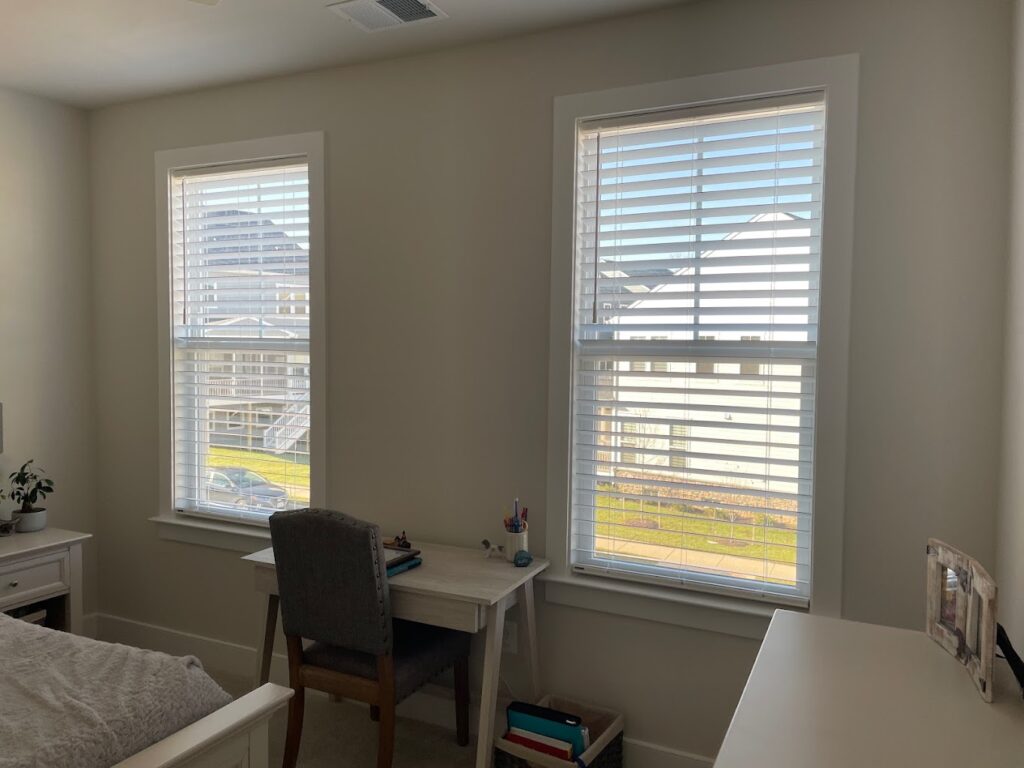
Request a Custom Blind Quote in Northern Virginia
If you’re still asking “how much do custom blinds cost for your home?” the most useful number is a quote based on the windows you want covered. At The Blind, Shade & Shutter Co., we can help you compare finishes, talk through mounting and controls, and identify which openings need a different solution before you place an order.
We serve Loudoun County, Fairfax County, northern Fauquier County, Prince William County, and Clarke County. Whether you’re updating one room in Leesburg, replacing several blinds in Vienna, or planning window coverings for a new home in Gainesville, call 703-669-2400 or email info@blindsco.com to schedule a consultation and request a customized quote. You can also visit our showroom at 52 W Colonial Hwy, Hamilton, VA 20158, to compare slat sizes, finishes, and operating styles in person.
No responses yet