

Sliding glass doors bring natural light into a home, provide convenient access to patios and decks, and help indoor living areas feel connected to the outdoors. However, their size and frequent use can make them one of the most challenging openings to cover effectively. Homeowners need a solution that manages sunlight, protects privacy, complements the room, and remains easy to operate. For many Fairfax County homes, sliding door shutters in Oakton provide that balance through a combination of adjustable louvers, durable construction, and custom sizing.
Choosing a covering for a sliding glass door involves more than selecting a color or material. The treatment must fit the opening precisely, operate without interfering with the door, and accommodate the household’s daily routine. A professionally designed shutter system can provide long-lasting performance while creating a clean, architectural appearance. The Blind, Shade & Shutter Co. helps homeowners evaluate their doors, compare configurations, and choose a customized solution suited to the room and the way the door is used.
Why Sliding Glass Doors Require a Specialized Window Treatment
A standard window remains stationary, but a sliding glass door is an active passageway. Family members may use it throughout the day to reach a deck, patio, backyard, or outdoor entertaining area. A poorly selected covering can become frustrating if it is difficult to move, obstructs the handle, gathers in the doorway, or fails to provide convenient access.
The large glass surface also allows more sunlight and heat to enter than a typical window. Depending on the door’s orientation, glare may affect a television screen, computer monitor, dining area, or seating arrangement. Afternoon sunlight can also make the room uncomfortable and contribute to fading on nearby floors, furnishings, and finishes.
A well-planned shutter system addresses these practical concerns while giving the opening a finished appearance. Rather than treating the door as an oversized window, a specialist considers the direction in which it opens, the available clearance, the surrounding trim, the depth of the opening, and the homeowner’s preferred method of operation. This detailed approach is one reason custom sliding door shutters in Oakton can perform more effectively than a generic covering purchased without professional measurements.
What Makes Shutters a Strong Choice for Patio Doors?
Shutters combine movable panels with adjustable louvers. The panels control access to the glass door, while the louvers control the amount and direction of light entering the room. Homeowners can tilt the louvers to reduce glare, close them for greater privacy, or open them to brighten the space.
Unlike treatments made from flexible material, shutters have a structured appearance. Their solid frames and defined lines can complement traditional, transitional, and contemporary interiors. Because the shutters are made for the specific opening, they can look like an intentional architectural feature rather than an accessory added after the home was completed.
The adjustable design also gives homeowners more control throughout the day. Louvers can be repositioned as the sun moves, allowing filtered daylight into the room without leaving the entire glass door exposed. When access to the patio or backyard is needed, the appropriate shutter panel can be moved out of the way.
For households looking for a treatment that combines function with a polished appearance, sliding door shutters in Oakton can provide privacy, light management, and convenient access in one coordinated system.
Understanding the Main Shutter Configurations
The correct configuration depends on the width of the door, the amount of wall space around it, the traffic pattern, and the homeowner’s design preferences. A professional consultation helps determine which system is most appropriate for the opening.
Bypass Shutter Panels
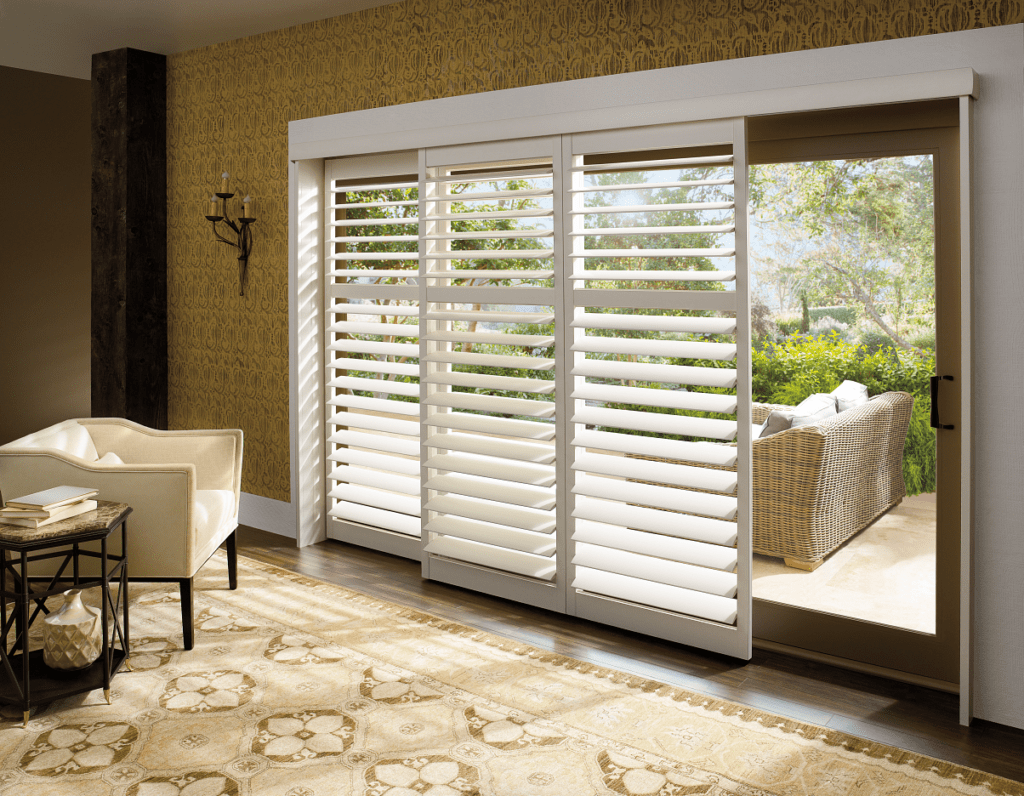
Bypass shutters use panels that slide horizontally along tracks. One panel passes behind or in front of another, much like the movement of many sliding glass doors. This configuration is often a practical choice when homeowners want to keep the area in front of the door clear.
Because the panels remain parallel to the glass, bypass shutters do not require the same outward swing clearance as hinged panels. This can be helpful in rooms where furniture, walkways, or architectural features limit the available floor space.
The panels can be moved to reach the active portion of the door. The louvers may also be adjusted while the panels remain in place, giving homeowners flexible control over visibility and sunlight.
Bi-Fold Shutter Panels
Bi-fold shutters consist of hinged panels that fold together as they are opened. Depending on the design of the room and door, the panels may fold toward one side or divide and fold toward both sides.
When fully opened, bi-fold panels can provide a broad view through the glass and convenient access to the doorway. They do require sufficient space for the folded panels, so nearby walls, furniture, and walking paths must be considered carefully.
Custom Panel Arrangements
Not every patio door has a standard size or layout. Some openings include multiple glass panels, unusually wide spans, adjacent windows, or limited mounting space. Custom panel arrangements allow the shutter system to be designed around these conditions instead of forcing the door to fit a predetermined product size.
A specialist can evaluate which panels need to move, where they should stack, how the tracks should be positioned, and whether the surrounding construction affects installation. This customization is especially important when selecting sliding door shutters in Oakton for older properties, renovated homes, or rooms with distinctive architectural details.
Choosing Between Bypass and Bi-Fold Shutters
Both configurations can be attractive and functional, but they behave differently. The better choice depends on how the homeowner expects to use the opening.
Bypass panels generally work well when floor space is limited or when the homeowner wants panels to remain close to the door. They slide smoothly from side to side and do not swing into the room. However, the panels overlap when open, which means part of the glass may remain covered.
Bi-fold panels can fold away from a larger portion of the glass, offering a more open view when the shutter system is completely retracted. The tradeoff is that the folded panels need room to project into the space or rest beside the opening.
The location of furniture can influence the decision. A dining table, sectional sofa, kitchen island, or narrow passageway may make one arrangement more practical than the other. Door use matters as well. A frequently used backyard entrance may benefit from a different configuration than a door opened only occasionally.
During an in-home consultation, the surrounding area can be assessed in real-life conditions. That makes it easier to select sliding door shutters in Oakton that work with the room instead of requiring the household to rearrange the space around the treatment.
Managing Sunlight and Glare
Large patio doors can introduce an abundance of natural light, but unrestricted sunlight is not always comfortable. Bright rays can create glare on televisions, laptops, and other screens. They may also cause certain parts of a room to feel noticeably warmer during the day.
Shutter louvers allow homeowners to redirect light rather than choosing only between a fully covered door and completely exposed glass. Tilting the louvers upward or downward can soften direct sunlight while maintaining some natural illumination. This flexibility can be useful in living rooms, kitchens, breakfast areas, home offices, and bedrooms with patio access.
The best louver position may change throughout the day. Morning light may be welcome, while stronger afternoon sun may require more coverage. Adjustable shutters make it possible to respond to those changing conditions without moving the entire treatment.
Although window treatments do not replace a home’s heating or cooling system, closing the louvers creates an additional layer between the room and the glass. Professionally fitted sliding door shutters in Oakton can therefore support a more comfortable interior while helping homeowners manage the intense sunlight that enters through a large glass opening.
Improving Privacy Without Sacrificing Daylight
A sliding glass door can provide a beautiful outdoor view, but it can also make the interior of a home visible from a neighboring property, sidewalk, street, or shared outdoor area. Privacy needs may vary depending on the time of day and the location of the room.
Closing the shutter louvers limits visibility through the glass. Tilting them allows homeowners to preserve some daylight while reducing direct sightlines. This is particularly useful when the household wants privacy without making the room feel completely closed off.
At night, uncovered glass can act almost like a mirror from inside while allowing people outside to see into a brightly illuminated room. Closing the shutters creates a more private environment and gives the room a secure, enclosed feeling.
Homeowners can also adjust separate panels differently. For example, the louvers on one section may remain open to admit light while another section is closed to block a direct view from a nearby home. This adjustable coverage is a valuable reason to consider sliding door shutters in Oakton for properties where privacy and natural light are both priorities.
Supporting Everyday Access and Household Traffic
A successful shutter system must accommodate the people who use the door. If the opening serves as the primary route to a patio, grill, garden, or backyard, the panels should be easy to move without creating an obstacle.
The active door panel is an important part of the design. A professional will identify which section of glass moves, where the handle is located, and how family members naturally approach the doorway. The shutter layout can then be planned so that access feels intuitive.
Households with children may prioritize simple operation and clear walking paths. Pet owners may need frequent backyard access. Homeowners who entertain may want the shutters to open more broadly when guests are moving between indoor and outdoor areas. Someone covering a less frequently used door may place greater emphasis on light control and privacy.
The solution should match these habits rather than imposing an inconvenient routine. Properly configured sliding door shutters in Oakton can provide dependable coverage while allowing the patio door to remain a useful, accessible part of the home.
Selecting the Right Material
Shutter material affects appearance, durability, weight, maintenance, and suitability for the environment. The ideal choice depends on the specific product options available, the size of the opening, and conditions within the room.
Wood shutters offer natural character and can coordinate beautifully with cabinetry, flooring, furniture, and interior trim. Variations in grain contribute to their distinctive appearance. Because wood is a natural material, its suitability should be evaluated in relation to moisture, sun exposure, and the size of the panels.
Composite and engineered materials can provide consistent finishes and dependable performance. Some homeowners appreciate their resistance to everyday wear and their straightforward maintenance requirements. They may be appropriate for active households or spaces exposed to changing indoor conditions.
The material must also be suitable for the dimensions of the shutter system. Sliding door panels are considerably larger than shutters made for an average window, so structural stability matters. A professional can explain the available materials, their benefits, and any limitations associated with the size and configuration of the opening.
By evaluating construction quality as carefully as color and style, homeowners can select sliding door shutters in Oakton designed to maintain their appearance and operation through regular use.
Louver Size and Its Effect on the View
Louver size influences both the appearance of the shutters and the view through them. Larger louvers create wider openings when tilted, which can provide a broader view and a more contemporary visual effect. Smaller louvers create more horizontal lines and may complement rooms with traditional proportions.
The scale of a sliding glass door is important. Because the opening is large, the louver size should look balanced in relation to the panels and the room. A size that works well on a small window may appear overly busy across a wide patio door.
Homeowners should consider how the shutters will look in several positions: completely closed, tilted for filtered light, and fully opened. Samples can help demonstrate how different louver sizes affect visibility, shadow patterns, and the overall character of the treatment.
There is no single correct louver size for every home. Ceiling height, trim details, furniture scale, and personal preference all contribute to the choice. Custom sliding door shutters in Oakton allow these proportions to be considered together so the finished treatment feels appropriate for both the door and the surrounding interior.
Coordinating the Finish With the Room
The shutter finish should relate to the permanent elements of the room, including wall color, trim, doors, flooring, cabinetry, and built-in features. A close match to the existing trim can create a cohesive architectural effect, while a contrasting finish can make the shutters a stronger design feature.
White and neutral finishes remain versatile because they coordinate with many interior palettes. Wood tones can introduce warmth and reinforce natural materials already present in the home. The right choice depends on whether the homeowner wants the shutters to blend into the room or stand out.
Lighting should be considered when selecting a finish. A color viewed under showroom lighting or on a computer screen may appear different beside the actual door. Natural light, interior bulbs, surrounding paint colors, and reflections from outdoor landscaping can influence how the finish looks.
Viewing physical samples in the home helps reduce uncertainty. It also allows the homeowner to compare the sample directly with trim and other nearby finishes. This careful selection process helps sliding door shutters in Oakton look integrated with the home rather than visually disconnected from the room.
Why Precise Measurements Matter
Sliding glass doors that appear identical at first glance may differ in width, height, depth, trim placement, floor clearance, and frame construction. Even a small measurement error can affect how the panels travel, overlap, fold, or align.
Professional measurement involves more than recording the width and height of the glass. The specialist must evaluate the full opening, the condition of the surrounding surfaces, the position of handles and locks, and the space available for tracks or folded panels. Baseboards, crown molding, vents, switches, and nearby furniture may also influence the design.
Floors and walls are not always perfectly level or square, particularly in older homes. A custom installation must account for those variations so the panels operate correctly and appear aligned. Measuring only one point across a wide opening may fail to reveal differences elsewhere.
Accurate specifications are essential when ordering sliding door shutters in Oakton because the system is produced for a particular doorway. Professional measuring reduces the risk of avoidable fit issues and provides the foundation for a polished installation.
The Value of Professional Installation
A custom shutter system must be installed securely and adjusted carefully. Sliding or folding panels need proper alignment so they move smoothly, remain stable, and meet correctly when closed. Tracks, frames, and hardware must be positioned according to both the product requirements and the conditions of the home.
During installation, technicians can make appropriate adjustments for the opening and test the movement of each panel. They can also confirm that the louvers tilt properly, the panels clear the floor and surrounding trim, and the active part of the glass door remains accessible.
Large shutter panels can be cumbersome to handle, making installation experience especially valuable. Professional installers have the tools and familiarity needed to position the components accurately without treating the opening like a standard window.
The installation is also the final opportunity to review operation and care. Homeowners can learn how to move the panels, adjust the louvers, and maintain the finish. Professionally installed sliding door shutters in Oakton are more likely to deliver the smooth operation and finished appearance expected from a made-to-measure treatment.
Caring for Sliding Door Shutters
Routine care is generally straightforward. Dust can be removed from the louvers and frames with a clean microfiber cloth, soft duster, or suitable vacuum attachment used gently. Working from the top downward can prevent dust from settling on areas that have already been cleaned.
If additional cleaning is necessary, homeowners should follow the manufacturer’s instructions for the specific shutter material and finish. Excess moisture, harsh chemicals, abrasive pads, and aggressive scrubbing may damage certain surfaces. Testing an approved cleaning method in an inconspicuous area is a sensible precaution.
Tracks should be kept clear of debris so panels can move without unnecessary resistance. Homeowners should avoid forcing a panel that does not travel normally. If movement changes or hardware appears loose, professional service may prevent a minor adjustment from becoming a larger problem.
Treating the panels carefully is particularly important because of their size. Consistent light maintenance can help custom sliding door shutters in Oakton continue to look attractive and function smoothly through years of daily use.
Shutters for Different Rooms and Home Styles
Sliding glass doors appear in many areas of the home, and each room may create different priorities. In a family room, glare control and easy backyard access may be most important. In a kitchen or breakfast area, homeowners may focus on durability, simple cleaning, and a finish that coordinates with cabinetry.
A bedroom with a sliding door may require stronger privacy and light control. A home office may benefit from adjustable louvers that reduce screen glare while preserving daylight. In an entertaining space, the ability to open the panels and connect the room with a patio or deck may take priority.
Shutters can also adapt to a wide range of architectural styles. Clean lines and broad louvers can complement contemporary homes, while detailed frames and traditional finishes can suit classic interiors. Transitional spaces may combine a simple finish with architectural panel construction for a balanced result.
The goal is not merely to cover the glass. The treatment should solve the room’s practical challenges while contributing to its overall character. A personalized plan allows sliding door shutters in Oakton to support the specific function and style of each space.
Local Considerations for Oakton and Fairfax County Homes
Oakton includes a mix of established neighborhoods, wooded properties, renovated residences, and newer construction. Homes may have patios facing neighboring lots, decks overlooking mature trees, or glass doors exposed to strong sunlight during certain parts of the day. These varied conditions make an in-home evaluation especially useful.
The direction of the door affects how sunlight enters. A west-facing opening may receive intense afternoon light, while an east-facing door may brighten the room early in the day. Trees and nearby buildings can also change light patterns throughout the year.
Privacy needs differ from one property to another. A secluded backyard may allow homeowners to keep the louvers open more frequently, while a door facing a street or neighboring home may require more adjustable coverage. Furniture placement and household traffic introduce additional considerations that cannot be assessed from measurements alone.
Working with a company familiar with Fairfax County allows homeowners to discuss these local housing characteristics in context. The Blind, Shade & Shutter Co. also serves Loudoun County, northern Fauquier County, Prince William County, and Clarke County, providing customized window treatment guidance across Northern Virginia.
Questions to Ask During a Consultation
Before choosing a shutter system, homeowners can prepare a few questions about design, operation, installation, and maintenance:
- Which configuration works best with the direction of the sliding door?
- Where will the panels rest when they are open?
- How much of the glass will remain visible with the panels stacked or folded?
- Will nearby furniture interfere with operation?
- Which materials are suitable for the width and conditions of the opening?
- What louver size provides the preferred balance of view and privacy?
- How should the shutters be cleaned?
- What preparation is required before installation?
- How will the frame or track coordinate with the existing trim?
- Which finish looks most consistent with the room?
A consultation should also include a discussion of how often the door is used and what the homeowner wants to improve. Sharing concerns about glare, privacy, heat, furniture placement, or access helps the specialist recommend a more appropriate solution.
Common Mistakes to Avoid
One common mistake is choosing a treatment based only on appearance. A product may look attractive in a photograph but fail to work well with the available clearance or traffic pattern.
Another mistake is assuming that all sliding doors have standard measurements. Ordering from basic dimensions without accounting for trim, handles, floor variation, and mounting conditions can lead to fit and operational problems.
Homeowners may also overlook where the panels will go when opened. A configuration that blocks a walkway, overlaps the wrong part of the door, or conflicts with furniture can create daily frustration.
Selecting a finish from an online image alone can also be risky. Screens display colors differently, and the home’s lighting may change the appearance of a sample. Reviewing physical materials in the room provides a more reliable comparison.
Finally, it is important to consider long-term use. The shutters should remain convenient on an ordinary day, not only look appealing immediately after installation. Planning around actual household habits produces a much more satisfying result.
Schedule a Custom Shutter Consultation
A sliding glass door deserves a treatment designed around its dimensions, location, and everyday use. Custom shutters can provide precise light control, dependable privacy, easy access, and an architectural appearance that complements the rest of the home. The right configuration, material, louver size, and finish will depend on the opening and the homeowner’s priorities.
The Blind, Shade & Shutter Co. works with homeowners in Oakton and throughout Fairfax County, Loudoun County, northern Fauquier County, Prince William County, and Clarke County. During a professional consultation, the team can evaluate the door, discuss available shutter configurations, take accurate measurements, and help create a solution tailored to the space.
To learn more about sliding door shutters in Oakton, call The Blind, Shade & Shutter Co. at 703-669-2400 or email info@blindsco.com. A personalized consultation is the best way to compare suitable options and begin planning shutters that look beautiful, operate smoothly, and meet the practical needs of your home.
Comments are closed