
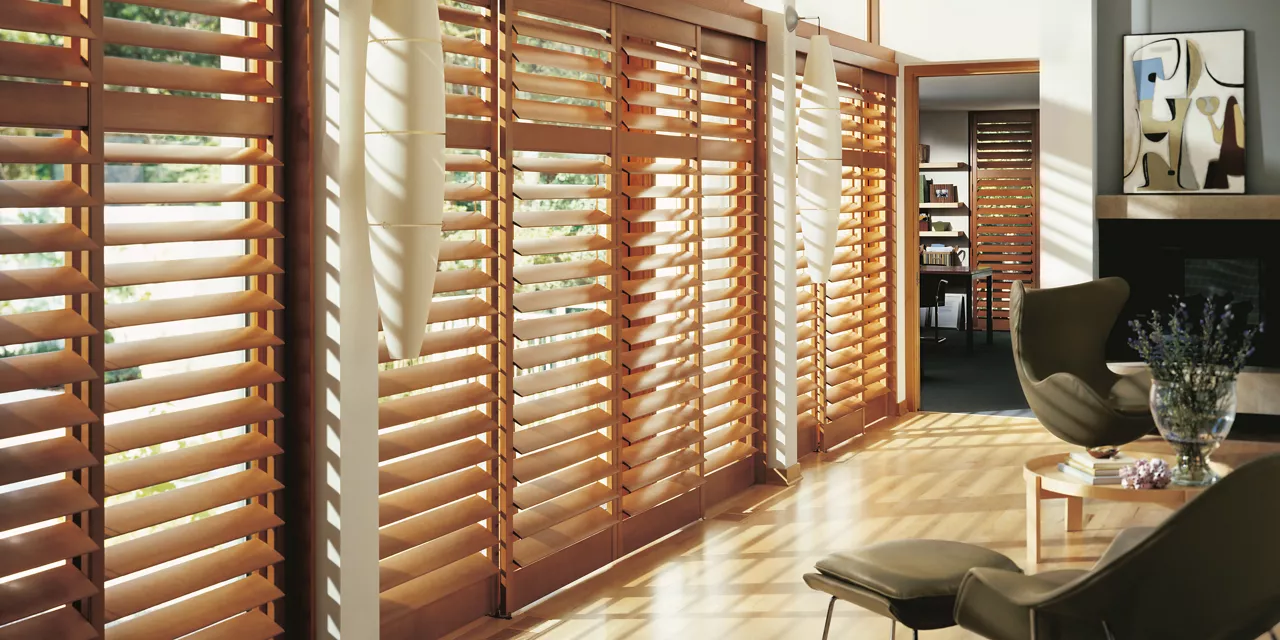
Sliding glass doors bring generous natural light into a home and create a convenient connection between indoor and outdoor living areas. However, their size and frequent use can also make them challenging to cover. Homeowners need a solution that provides privacy and light control without making the door difficult to open, blocking access to the handle, or interfering with the surrounding space.
Sliding door shutters offer an attractive and durable way to manage these large glass openings. Unlike products that simply raise and lower, shutters can be configured to move horizontally, making them particularly well suited to sliding doors. Their adjustable louvers give homeowners control over sunlight, privacy, and visibility, while their substantial construction creates a polished, architectural appearance.
For homeowners considering sliding door shutters in South Riding, careful product selection and accurate measurement are essential. The size and configuration of the doorway, the direction in which the door opens, furniture placement, available wall space, and everyday traffic patterns can all influence the most appropriate shutter design.
This guide explains how sliding door shutters work, the different configurations available, their benefits, and what South Riding homeowners should consider before placing an order.
Why Sliding Glass Doors Require a Specialized Window Covering
A typical window and a sliding glass door function very differently. A window covering may only need to manage light and privacy, but a door covering must also accommodate regular movement through the opening.
Sliding doors are often located in kitchens, family rooms, finished basements, sunrooms, and dining areas. They may lead to a deck, patio, backyard, or another outdoor area used throughout the day. In an active household, the door might be opened repeatedly by adults, children, guests, or pets.
The large expanse of glass can also introduce several challenges:
- Intense sunlight during certain times of day
- Glare on televisions and computer screens
- Reduced privacy after dark
- Heat gain during warmer months
- Cold glass near living areas during winter
- Potential fading of furnishings and flooring
- Difficult-to-cover dimensions
- Frequent access to the door handle and lock
A suitable covering must address these concerns while allowing the door to remain functional. Sliding shutters can be designed around the opening so panels move out of the way when access is needed and return to a closed position for privacy and light control.
What Are Sliding Door Shutters?
Sliding door shutters are solid-framed panels containing adjustable louvers. Rather than swinging into the room like traditional hinged shutter panels, they generally move horizontally along a track.
This movement makes them suitable for wide glass doors because the panels can follow the same general direction as the operating door. Depending on the system, panels may slide past one another, stack at one or both sides, or fold together as they are opened.
When the shutter panels are closed across the glass, the louvers can be adjusted to manage light and privacy. When homeowners need to use the doorway, the panels can be moved aside according to the selected configuration.
Sliding shutters are custom made for the dimensions and layout of the opening. This is especially important because sliding doors vary in width, height, frame depth, handle placement, and the number of glass panels.
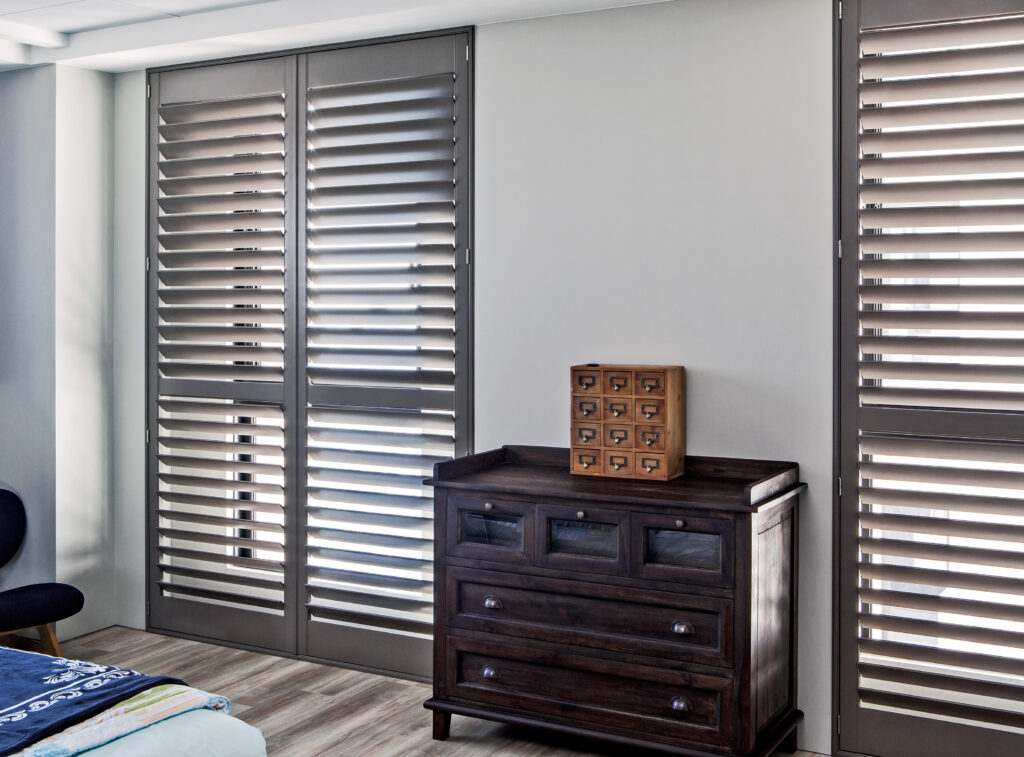
The Main Types of Sliding Door Shutter Systems
Several shutter configurations may be used for sliding glass doors. The most appropriate option depends on the opening, available space, and how the homeowners want the panels to operate.
Bypass Shutters
Bypass shutters are among the most common choices for sliding doors. The panels are mounted on parallel tracks and slide behind or in front of one another.
This arrangement is similar to the movement of many sliding glass doors. One shutter panel can move past another without swinging into the room, making bypass shutters practical where furniture or walking space limits the available clearance.
Benefits of Bypass Shutters
Bypass systems may offer several advantages:
- Panels move horizontally rather than swinging outward
- No large area of floor space is needed for operation
- The system works well for frequently used doors
- Adjustable louvers provide flexible light control
- Panels can be positioned over different areas of the glass
- The structured design creates a finished appearance
Some bypass systems allow the louvers to remain open while the panels move past one another. Other designs may require the louvers to be closed before one panel passes another. The exact operation depends on the manufacturer, panel depth, track configuration, and selected louver size.
This is an important detail to discuss during product selection. Homeowners should understand how the finished shutters will move during everyday use, not merely how they look when fully closed.
Front-Tilt and Rear-Tilt Considerations
Shutter louvers may be controlled by a visible tilt rod or a less visible mechanism positioned toward the rear or side of the panel. The choice affects both appearance and operation.
A traditional front tilt rod can provide a classic shutter look and makes louver adjustment straightforward. A hidden or rear-tilt system creates cleaner sightlines across the panels. On a bypass configuration, the selected tilt mechanism must also allow adequate clearance as the panels move past each other.
Bifold Shutters
Bifold shutters consist of hinged panels that fold together as they move along a track. Instead of overlapping one another, the connected panels collect toward the side of the opening.
When fully opened, bifold shutters can expose a substantial portion of the glass. This may appeal to homeowners who want a wider view or more direct access to the doorway when the shutters are not in use.
Benefits of Bifold Shutters
A bifold configuration may provide:
- Broad access to the glass door
- Panels that fold and stack at the side
- Adjustable louver control when the shutters are closed
- An architectural appearance
- Flexibility for wide openings
Bifold panels require room to fold and project outward as they stack. Furniture, wall placement, nearby doors, and the path people use through the room must therefore be considered carefully.
The weight and size of the panels also make quality hardware and professional installation particularly important. A properly designed track system helps the shutters move smoothly and remain aligned.
Multi-Panel Sliding Configurations
Very wide doors may require more than two shutter panels. A multi-panel system can divide the total width into manageable sections while providing coverage across the entire opening.
The exact number of panels is determined by several factors, including:
- Total opening width
- Maximum recommended panel size
- Shutter material
- Louver size
- Desired stacking position
- Door configuration
- Manufacturer specifications
- Visual proportions
Dividing the opening into more panels may make each individual panel easier to move, but it also introduces additional vertical stiles into the view. Using fewer, wider panels may create a more open appearance, though size and weight limitations must be respected.
A design consultation allows homeowners to compare these tradeoffs before choosing a configuration.
Benefits of Sliding Door Shutters
Sliding shutters provide more than basic coverage. Their adjustable and durable design can improve how a room looks and functions throughout the day.
Flexible Light Control
Large glass doors can fill a room with daylight, but that light is not always comfortable. Depending on the door’s orientation, direct sun may create glare or make the space feel excessively bright.
Shutter louvers can be tilted to redirect sunlight rather than simply blocking it. For example, homeowners may angle the louvers to reduce direct glare while allowing softer daylight to enter the room.
The panels can also be repositioned across the opening. If sunlight affects only one section of the door, the shutters may be arranged to provide coverage where it is most useful, subject to the selected track configuration.
Improved Privacy
Sliding doors can create a broad view into the home after dark, especially when interior lights are on. Closing the shutter panels and louvers provides substantial privacy without requiring homeowners to install a temporary or visually distracting covering.
During the day, the louvers can be angled to limit visibility from outside while preserving some natural light. The amount of privacy will depend on the angle of the louvers, viewing position, and lighting conditions.
Homes near sidewalks, neighboring properties, shared green spaces, or community walking paths may benefit especially from adjustable privacy.
Durable Construction
Sliding doors are frequently located in active areas of the home, so their coverings may receive significant daily use. Shutters have rigid panels and sturdy frames that can provide long-term performance when correctly selected, installed, and operated.
Their solid construction also helps them maintain a tailored appearance. Unlike soft materials that may shift near an open doorway, shutter panels retain their shape.
The durability of any product depends on its material, hardware, size, installation, and care. Because sliding shutter panels can be large and heavy, choosing an appropriate system is essential.
A Coordinated Architectural Appearance
Shutters become a prominent design feature because they frame the entire doorway. Their clean lines can complement many interior styles, including traditional, transitional, contemporary, farmhouse-inspired, and casual family spaces.
Homeowners may select from different finishes, frame styles, louver sizes, and control options. The goal is to coordinate the sliding-door covering with nearby windows, trim, flooring, and other fixed elements without overwhelming the room.
If shutters are already installed on nearby windows, using shutters on the sliding door can create a more unified appearance. The products do not necessarily need to be identical, but consistent finishes and louver proportions can help them relate visually.
Simple Louver Adjustment
Shutters allow homeowners to change the angle of the louvers without moving the entire panel. This makes it possible to respond to shifting sunlight, changing privacy needs, and different activities throughout the day.
A family might open the louvers in the morning, angle them during periods of direct sun, and close them fully at night. The panels themselves only need to be moved when someone wants a clearer view or access through the doorway.
Cord-Free Operation
Shutters do not require traditional hanging lift cords. Louvers are adjusted through the selected tilt mechanism, while panels slide or fold along their track.
This cord-free design creates a cleaner appearance and can be especially appealing in homes with children or pets. Although the lack of operating cords is beneficial, families should still supervise children near sliding doors and keep the panel path clear.
Potential Energy and Comfort Benefits
Any interior window covering creates an additional layer between the room and the glass. When shutter panels and louvers are closed, they may help reduce the sensation of heat or cold near a large sliding door.
The exact effect depends on many factors, including:
- The construction and condition of the glass door
- The shutter material
- The fit around the opening
- The direction the door faces
- Outdoor temperatures
- Sun exposure
- Air leakage around the door frame
Shutters should not be treated as a replacement for an efficient, properly sealed glass door. However, homeowners may find that closing them improves comfort in the immediate area, particularly during periods of strong sunlight or cold weather.
Are Shutters Practical for Frequently Used Sliding Doors?
Yes, shutters can work well on frequently used doors when the system is designed around the household’s traffic patterns. The key is choosing a panel configuration that provides convenient access.
During the consultation, homeowners should explain how they use the door. Questions to consider include:
- Which glass panel actually slides?
- Does the door open from the left, right, or center?
- How often is the doorway used?
- Do children regularly use the door?
- Does a pet need to pass through it?
- Is the door used mainly during warmer months or throughout the year?
- Does the family carry food, furniture, or outdoor equipment through the opening?
- Where would the shutter panels need to stack?
- Is there furniture near either side of the door?
A bypass design may be particularly practical when the shutters need to remain close to the glass and out of the walking path. A bifold design may be useful when the homeowner wants the panels to collect at the side and expose more of the doorway.
Neither style is universally better. The correct choice depends on how the room and door function together.
How Sliding Door Shutters Affect the View
Because shutters have solid frames, louvers, and vertical stiles, they remain visible even when the louvers are open. Homeowners who want a completely unobstructed view should think carefully about where the panels will stack when opened.
A bypass system generally keeps the panels positioned in front of some portion of the glass. The panels overlap as they slide, so part of the doorway may remain covered.
Bifold shutters can often move more of the panels to the side, but the folded stack requires adequate room and may project into the space. If there is insufficient wall or clearance near the opening, the stacking arrangement may become inconvenient.
Homeowners should decide whether their priority is:
- Keeping the shutters compact and close to the glass
- Exposing as much glass as possible
- Preserving nearby floor space
- Maintaining the best view
- Creating the simplest route through the door
- Minimizing the visible panel stack
Seeing product demonstrations and discussing the proposed layout can make these differences easier to understand.
Choosing the Right Louver Size
Louver size influences the shutter’s appearance, view, and proportions. Larger louvers can create wider spaces between horizontal lines when open, which may provide a more expansive view through the panels. Smaller louvers produce a more traditional appearance with additional horizontal lines.
The dimensions of a sliding glass door often make medium or larger louvers visually appropriate. However, the ideal choice depends on the home’s style, nearby shutters, ceiling height, panel width, and desired viewing area.
Louver size can also affect how bypass panels move. In certain configurations, larger louvers may require more space between tracks or need to be closed before panels overlap. Manufacturer specifications and the selected tilt system will influence what is possible.
Rather than choosing louver size from a small photograph, it is helpful to view a physical sample. The proportions can feel very different when seen against a full-height doorway.
Selecting an Appropriate Shutter Material
Shutter materials vary in weight, finish, stability, and construction. Sliding door panels are much larger than typical window shutter panels, so material selection must account for their dimensions and movement.
Depending on the available product line, options may include natural wood, engineered materials, composite products, or other specialized constructions.
Wood Shutters
Wood shutters can provide warmth, natural character, and a furniture-quality appearance. Different painted and stained finishes may be available.
Because sliding-door panels can be tall and wide, the selected wood product must be engineered for the intended dimensions. Panel size limitations, weight, and the surrounding environment should all be considered.
Composite or Engineered Shutters
Composite and engineered materials may offer stability, durable finishes, and consistent appearance. They can be a practical choice for active households, though capabilities vary significantly among products.
No material should be selected solely by category name. Homeowners should compare the actual construction, warranty, finish, maximum panel dimensions, and recommended applications of the specific product.
Color and Finish Considerations
Sliding door shutters cover a large area, so their color becomes an important visual element in the room. White and off-white finishes are popular because they coordinate easily with many trim colors and help the panels feel bright and clean.
However, the shutter color does not always need to match the wall or trim exactly. A slightly warmer or cooler finish may coordinate better with the flooring, cabinetry, or nearby window coverings.
When choosing a finish, consider:
- Existing door and window trim
- Wall color
- Cabinetry
- Flooring undertones
- Nearby shutters or blinds
- Natural and artificial lighting
- Whether the room may be repainted later
Samples should be viewed inside the home at different times of day. A finish that appears neutral in one setting may look warmer, cooler, brighter, or darker beside the room’s existing materials.
Inside-Mount and Outside-Mount Possibilities
Mounting options depend on the construction of the sliding-door opening. Some shutters may be mounted within a recessed area, while others require an outside mount surrounding the opening.
Inside Mount
An inside-mounted system is installed within the available recess. This can create a contained, integrated appearance, but it requires sufficient depth and clearance.
Door handles, locks, trim, and the movement of the glass panels must be evaluated. Even if the opening appears deep enough, projecting hardware may prevent the shutters from operating correctly.
Outside Mount
An outside-mounted system is installed on or beyond the surrounding wall or trim. This may provide additional clearance for door handles and other obstructions. It can also allow the shutters to cover an opening that lacks adequate mounting depth.
Because outside-mounted shutters extend beyond the glass area, homeowners should consider their relationship to nearby outlets, switches, vents, cabinetry, or wall decorations.
The best mounting method is determined by the actual doorway rather than appearance alone.
The Importance of Accurate Measurements
Sliding glass doors are large openings, and even small measurement errors can affect the installation. The top, middle, and bottom widths may vary. Floors and ceilings may not be perfectly level, and the opening may not be completely square.
Professional measurement should account for:
- Exact width and height
- Differences across the opening
- Mounting depth
- Door frame construction
- Handle and lock projection
- Baseboards and trim
- Track placement
- Panel stacking space
- Floor clearance
- Ceiling clearance
- Nearby furniture
- Wall obstructions
- Access to the operating door
The consultant must also determine how many shutter panels the opening can support and where the panel divisions should fall. Ideally, the shutter layout will coordinate with the vertical lines of the sliding door whenever practical.
Why Panel Alignment Matters
Sliding doors contain their own vertical frames. Shutter panels add another set of vertical lines through their stiles and overlaps. When possible, aligning these divisions can create a more balanced appearance and preserve a clearer view.
Perfect alignment is not always possible because shutter panel dimensions, track systems, structural requirements, and the door’s layout may differ. However, panel placement should be planned deliberately.
Homeowners may wish to review a drawing or detailed description of the proposed configuration before ordering. This helps clarify:
- The number of panels
- The width of each panel
- Which panels slide or fold
- The direction of movement
- The stacking location
- The position of vertical stiles
- The expected visible glass area
Custom shutters are made specifically for the opening, so these choices should be resolved before production.
Planning Around Furniture and Room Layout
The area surrounding a sliding door can affect the practicality of a shutter system. A sofa, dining table, kitchen island, console, or floor vent may limit panel movement or make certain configurations inconvenient.
Bypass shutters usually require less projection into the room, making them useful where floor space is limited. Bifold panels need room to fold, so the area in front of and beside the door must remain sufficiently clear.
Traffic flow is equally important. A panel stack should not create an obstacle in the route between the home and patio. If people frequently carry trays, outdoor cushions, toys, or gardening supplies through the doorway, the access point should be wide and simple to navigate.
The consultation should consider the room as it is actually used, not only the dimensions of the glass.
Shutters for Homes with Children and Pets
Sliding doors are often magnets for household activity. Children may watch the backyard through the glass, and pets may sit near the doorway or react to movement outside.
The rigid construction and cord-free operation of shutters can be beneficial in these environments, but the panels still need appropriate care. Children should not climb on, hang from, or force the louvers. Pets that scratch at the door may also damage the finish or panel over time.
Families can support smooth operation by:
- Keeping toys away from the track
- Teaching children how the panels move
- Avoiding force when a panel meets resistance
- Keeping pet beds clear of the stacking area
- Cleaning debris from the track
- Checking that furniture does not obstruct movement
- Using the designated handle or stile when moving panels
If a pet needs frequent access to the yard, discuss that routine during the consultation. The shutter layout should make it easy to reach the operating portion of the glass door.
Cleaning and Maintaining Sliding Shutters
Shutters are relatively straightforward to maintain. Routine dusting helps prevent buildup on the louvers, panel frames, and track.
A microfiber cloth, soft duster, or vacuum with an appropriate brush attachment may be used, depending on the manufacturer’s care instructions. Louvers should be supported and handled gently during cleaning.
The track should also remain free of dirt, pet hair, and small objects. Debris can interfere with panel movement and place unnecessary stress on the hardware.
Homeowners should avoid:
- Saturating the shutter material with water
- Using harsh or abrasive cleaners
- Forcing stuck panels
- Pulling on louvers to move an entire panel
- Allowing objects to remain in the track
- Attempting unapproved hardware adjustments
If the panels become difficult to move or appear misaligned, professional service may be preferable to an improvised repair.
Comparing Shutters with Other Sliding-Door Coverings
Shutters are not the only way to cover a sliding door. Homeowners may also consider vertical blinds, panel-style shades, cellular shades designed for horizontal travel, or other specialized products. Each option provides a different appearance and method of operation.
Shutters may be especially appealing when the homeowner prioritizes:
- Adjustable louvers
- Cord-free operation
- Durable, rigid panels
- Architectural character
- Coordination with shutters on nearby windows
- Long-term visual appeal
- Precise control over light direction
However, shutters also occupy more physical space than some other coverings. Their frames remain visible, and the panels must stack or overlap somewhere. Families seeking the smallest possible stack or the softest appearance may prefer a different type of window covering.
A knowledgeable consultant can compare several options without assuming that one product is right for every doorway.
Are Sliding Door Shutters Suitable for Every Door?
Shutters can be customized for many sliding doors, but not every opening is equally suitable. Certain doors may present limitations involving depth, width, handle projection, ceiling height, or surrounding obstructions.
The shutter system must not prevent the glass door from opening, closing, locking, or functioning as intended. It should also preserve safe, reasonable access through the doorway.
Additional evaluation may be necessary for:
- Extra-wide multi-panel doors
- Doors with unusually large handles
- Openings with very limited mounting depth
- Doors positioned close to a corner
- Sloped floors or ceilings
- Doors with transom windows
- Openings adjacent to cabinets or built-ins
- Frequently used primary entry points
- Glass doors with nonstandard operating patterns
An in-home assessment is the most reliable way to determine whether shutters are appropriate and which configuration will work.
Custom Shutters Versus Standard-Size Products
Sliding doors vary too much for a one-size-fits-all approach. A covering that is slightly too wide, too narrow, or too shallow can interfere with operation and appear poorly integrated.
Custom shutters are designed around the exact opening. This allows the product to account for:
- Door dimensions
- Hardware location
- Panel direction
- Mounting conditions
- Desired louver size
- Finish selection
- Traffic flow
- Stacking requirements
- Visual alignment
A custom design also gives homeowners more control over the final appearance. Rather than accepting a generic panel division, they can select a configuration that suits the scale and style of the room.
What to Expect During an In-Home Consultation
An in-home consultation allows a specialist to inspect the sliding door, take detailed measurements, and discuss how the household uses the space.
The consultation may include:
- Reviewing the door’s construction and operation
- Identifying the active sliding panel
- Measuring the opening at multiple points
- Checking the frame depth and surrounding surfaces
- Evaluating handles, locks, and trim
- Discussing bypass and bifold configurations
- Reviewing shutter materials and finishes
- Comparing louver sizes and tilt controls
- Planning the number and direction of panels
- Considering furniture and walking paths
- Explaining installation and everyday operation
- Preparing a customized quote
Homeowners should feel comfortable demonstrating how they normally use the door. Details such as where a pet waits to go outside or where a dining chair is positioned can affect the recommendation.
Questions to Ask Before Ordering Sliding Door Shutters
Before finalizing an order, ask for a clear explanation of how the proposed shutters will function.
Helpful questions include:
- Will the panels bypass or fold?
- Where will the panels stack?
- How much glass will remain covered when the shutters are open?
- Must the louvers be closed before the panels move?
- Will the shutter clear the door handle and lock?
- How many panels will be installed?
- Where will the vertical panel divisions fall?
- How far will the system project into the room?
- Which shutter material is recommended for this panel size?
- How should the panels and track be cleaned?
- Are there any operating limitations?
- What warranty applies to the panels, finish, track, and hardware?
- Will the door remain easy to access during everyday use?
Understanding these details helps ensure that the finished installation matches the homeowner’s expectations.
Sliding Door Shutters for Different Rooms
The ideal shutter configuration can vary according to the room surrounding the door.
Family Rooms
Family-room doors often face decks or backyards and may be used frequently. A bypass system can keep panels close to the glass, while adjustable louvers help reduce television glare and maintain evening privacy.
Kitchens and Breakfast Areas
A kitchen sliding door may be surrounded by cabinetry, counters, or dining furniture. Clearance is particularly important. Shutters should allow easy outdoor access without interfering with chairs or the route used to carry food outside.
Finished Basements
Walkout basements can benefit from the privacy and substantial appearance of sliding shutters. Light control may be especially important if the room serves as a media space, guest area, playroom, or home office.
Primary Bedrooms
A sliding door in a bedroom may lead to a balcony or private patio. Shutters can provide strong privacy and adjustable daylight while creating an architectural focal point.
Sunrooms and Enclosed Living Areas
Rooms with multiple glass doors require careful planning so the panel systems do not conflict. Coordinating louver sizes and finishes can create continuity, while individual controls allow different sections to be adjusted according to the sun.
Improving the Results of Your Shutter Project
A successful installation begins with realistic priorities. Before choosing a product, decide which factors matter most.
Your priorities may include:
- Easy access through the door
- Maximum privacy
- Reduced glare
- A wide outdoor view
- Minimal projection into the room
- Coordination with existing shutters
- Cord-free operation
- Durability for an active household
- A specific finish or architectural style
- Better comfort near the glass
Some goals involve tradeoffs. For example, a system that exposes more glass may require a larger panel stack at the side. A design that remains compact may leave more of the glass covered. Discussing these compromises early makes it easier to select a configuration that performs well in everyday life.
Find Sliding Door Shutters in South Riding
Sliding glass doors deserve a covering designed around their size, movement, and frequent use. Custom shutters can provide adjustable light control, privacy, cord-free operation, durable construction, and a distinctive architectural appearance. With bypass and bifold configurations available, the system can be planned around the doorway and the way your family uses the room.
The most important part of selecting sliding door shutters in South Riding is ensuring that the proposed panels will operate comfortably within the available space. Accurate measurement, thoughtful panel placement, suitable materials, and professional installation all contribute to a finished product that looks polished and works properly.
The Blind, Shade & Shutter Co. helps homeowners select custom blinds, shades, and shutters throughout Loudoun County, Fairfax County, northern Fauquier County, Prince William County, and Clarke County. Its experienced team can evaluate your sliding door, explain the available shutter configurations, and help you choose a solution suited to your privacy, light-control, and design preferences.
To learn more about sliding door shutters in South Riding or request a customized quote, call 703-669-2400 or email info@blindsco.com.
Comments are closed